
Passively encountering news among other information
In Scroll mode, individuals encounter news while browsing social media or aggregation platforms. They are not actively seeking news but reactively sift through whatever content appears in their feeds. Their engagement is often spontaneous and fleeting, shaped by the emerging news producers they follow and platform algorithms. To reach consumers in this mode, news producers need to intentionally create content that feels native to the platform and find patterns that break through to capture fleeting attention in the few seconds before viewers scroll to the next post.
Consumer need
Scrolling consumers have varying capacities to consume news. Some purposely shape their scrolling environment to get news, following specific accounts and consciously influencing algorithms by being sensitive to how long they linger on a post and using “like” or “show more [or less] like this.” They do this in the hope that their strategy will deliver the day’s most important headlines to consume during their downtime. Others invest less effort and respond only toward light-hearted, personally relevant or entertaining news, while avoiding heavier civic headlines altogether.
I love that I don't have to make it so intentional… [...] I can just be more casual. I can stumble across things and just see things as I scroll. If I need a break, I can look at more of the entertainment side of the app. And if I wanna learn more, I can hone in on that and do more research within the app.
[The Instagram feed is] very irregular. [...] So the topics may range from road safety to, something like terrorism or politics, things like that. [...] It's not something that you pick and choose what you want to see, but it's something that keeps you updated.
What triggers scrolling?
- Looking for entertainment
- Quick break in between tasks during the day
- Reflexive habit
- Fear of missing socially valuable information
Scrolling behaviors
- Scrolling through social media and reacting to content as it appears
- Occasionally moving from scroll to a deeper engagement mode
- Reading comments as additional content for sensemaking or substantiation
Scroll mode reshapes the production challenge; audiences won’t come looking for news, so news must find them. This becomes a core principle for how news producers can respond — creating content built for fast, feed-based discovery.
How news producers can respond
Package For The Platform
Package content to suit each platform's rhythm and algorithm
Leading news producers understand they win by owning the first two seconds of a consumer's attention, intentionally packaging their content to fit seamlessly within the Scroll mode on each specific platform. Most decisions about a piece of content are made during those first two seconds. Leading news producers craft repeatable formats to define a recognizable visual identity that flows naturally on social and video feeds yet still delivers clarity, accuracy and distinctiveness to conveniently reach younger audiences (an important part of the Ideal News Experience identified in our previous research). In practice, that means aligning the publishing rhythm, pace, tone, length and style with each platform's norms to maximize algorithmic promotion and audience satisfaction.
Some best practices seen among successful news producers include:
- Post consistently and predictably. The more regularly and predictably content appears, the more likely algorithms are to surface it and users are to recognize and engage with it. Setting a sustainable cadence based on capacity and the type of content produced is key. Breaking news or live coverage may call for multiple posts a day across platforms, while in-depth analysis, features or visual storytelling benefit from a more deliberate cadence. The Daily Aus exemplifies the latter approach. Rather than competing to break stories first, it focuses on clarity and context, publishing explainers through carousel cards or video explainer content. This steady, structured cadence positions The Daily Aus as a trusted, low-noise brand that prioritizes quality comprehension over the quantity of updates.
- Balance the tone to make news entertaining without trivializing
serious events. Some brands employ strategies to make news entertaining, moving away
from the formal style of traditional news organizations. These brands:
- Use humor. Some write sketches (Morning Brew and Local News International) to make the news more approachable. Using satire to mock individuals in power is a way to incorporate humor without making light of stories.
- Leverage personality, authenticity and conversation. They put members of their staff at the center of the story and let them use a conversational and informal tone to explain a story. Zetland describes this as "being like a friend sitting next to you in a pub."
- Approach complex or mundane subjects from unexpected angles to attract audience interest. Journalist Lisa Remillard explored the topic of Federal injunctions through the unusual lens of a judge shutting down "Alligator Alcatraz," for example.
- Be creative with formats. Some brands have found success by experimenting with novel news formats. For example, Quebrando o Tabu uses a quiz format in which a presenter goes onto the streets of Brazil and tests people's knowledge on topics such as women's rights before providing factual answers to raise awareness on undercovered topics.
- Match platform aesthetics. Successful news producers incorporate videos and imagery into their content (e.g. stitching or duet editing), clearly showing it is user-generated content and not overproduced news. They minimize overt branding and use a consistent visual theme and color palette to develop a distinct brand.
- Develop repeatable storytelling templates. Successful news producers identify and refine a storytelling format that
consistently drives engagement, then iterate over time to improve performance.
They treat the template as a set of ingredients — tone, language, appearance,
length, style, people and visuals — that they reuse across content. For
example, Local News International follows a consistent creative structure:
- Central personality: "Dave is a constant… He's the way into a story for a lot of people."
- Skit element and fictional characters: "99% are skit-based."
- Playing the viewer: "Dave almost always plays the viewer; he's the one trying to learn."
- Length and speed: "We intentionally try to cover as much of a story as we possibly can in like 38 to 41 seconds."
- Tone: "We want to use relatable, direct language that is free from traditional media constraints."
Developing repeatable templates is applicable on other platforms:
- Instagram: El Surtidor's Six to eight card visual explainers blend illustration and data storytelling.
- YouTube: HugoDécrypte's Actus du Jour is a daily 15 to 20 minute video summarizing the main news stories with an accessible tone.
- Spotify: Café da Manhã is a 25 to 30 minute weekday news briefings from Folha de S.Paulo.
Local News International
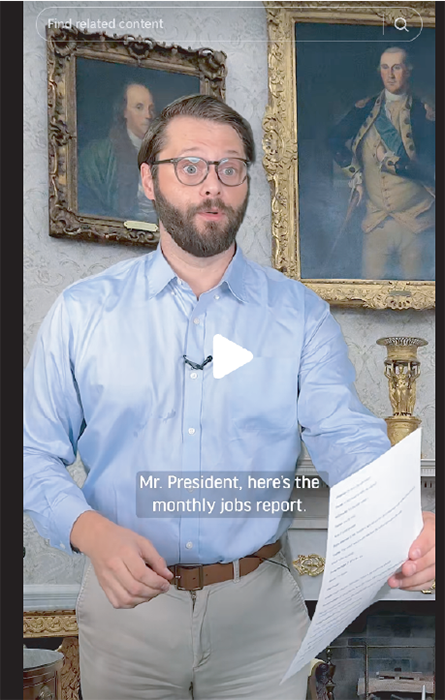
Within the first second, you know what the story is about and recognize Dave Jorgenson
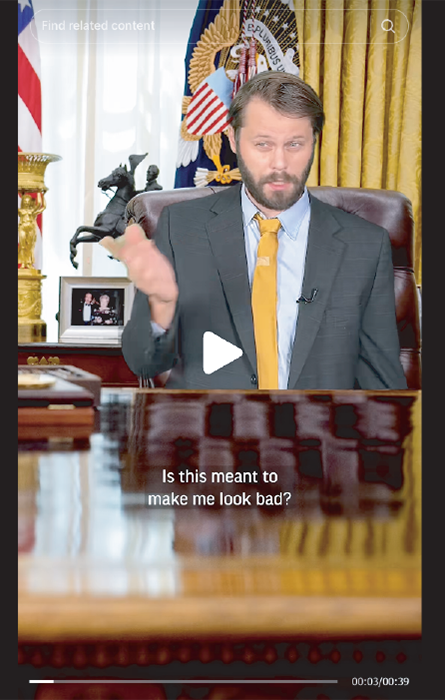
Caricatures of famous leaders (e.g. Donald Trump) make reference to, and satirize, decision making
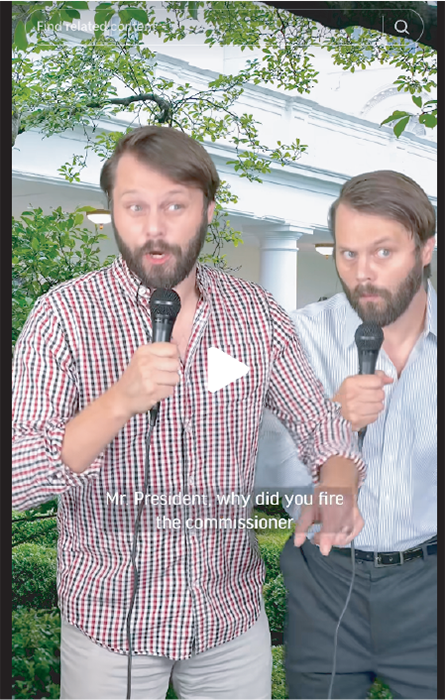
Other characters add comedic effect and allow the video to anticipate and address audience questions
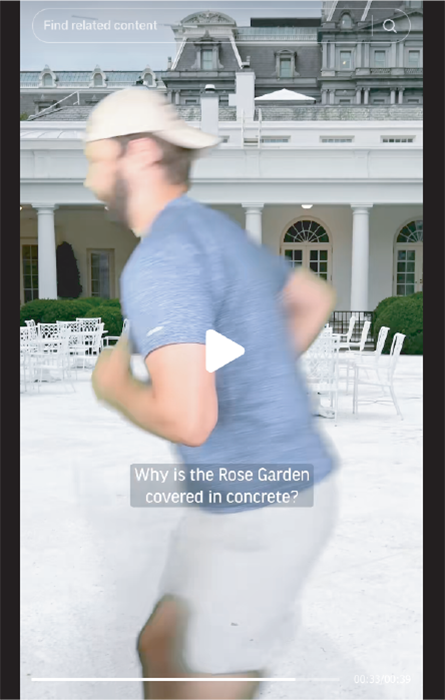
Jokes about stories in the social zeitgeist add humor and increase the likelihood of peer-to-peer sharing
Select Stories And Topics That Break Through
Select stories that work for the platform and in storytelling templates
Leading news producers understand that not all stories (or topics) work on social or video platforms. Rather than shoehorning topics or stories into a social or video setting, these producers carefully select stories they know will perform within their storytelling template.
- Reverse the journalism process. Successful news producers start with the storytelling template — the tone, language, appearance, length, style, people and visuals — and then select a story that complements the template. As the Local News International Team explained, they ask themselves, "What are the big stories today? Do we or Dave have a unique take on this? Does he have a way of making it approachable, interesting or humorous? We definitely don't try to just cover the main headlines." Similarly, Macy Gilliam has created an "Out There" series, which is now a separate franchise within Morning Brew where she spends a day with someone while they do their job. Her approach is distinctive not only for the topics she chooses but also in how she reverses the process. For instance, rather than simply telling viewers that hotdog stands are a tough business in New York because of all the permits required, she spends a day with a hotdog vendor to truly understand the job and the people behind it and creates an original piece of informative and heartwarming content.
- Choose the right story for the platform. Successful news producers recognize that stories that perform well on social and video platforms typically evoke emotion — curiosity, hope, anger, joy. Human or emotional narratives perform best on visual platforms such as TikTok and Instagram, while complex stories or those with multiple perspectives benefit from the space and pacing of YouTube or newsletters. For example, James Li uses YouTube videos to debunk myths that require complex investigation, while on TikTok he focuses more on breaking news events. Short-form clips, quotes or visual hooks from longer pieces can be repurposed for social platforms to draw audiences toward more in-depth reporting using teasers, highlights or explainer cuts that bridge the gap between immediacy and depth. For example, The Rest is Politics uses short clips from its longer podcast episodes on social platforms to spotlight moments of humor, disagreement or emotion between hosts Alastair Campbell and Rory Stewart. These snippets often capture relatable or surprising insights about current affairs and serve as conversational hooks that drive audiences to listen to the full episode.
Morning Brew "Out There" with Macy Gilliam
- The storytelling template is formalized by being given its own minibrand, making it easily discoverable
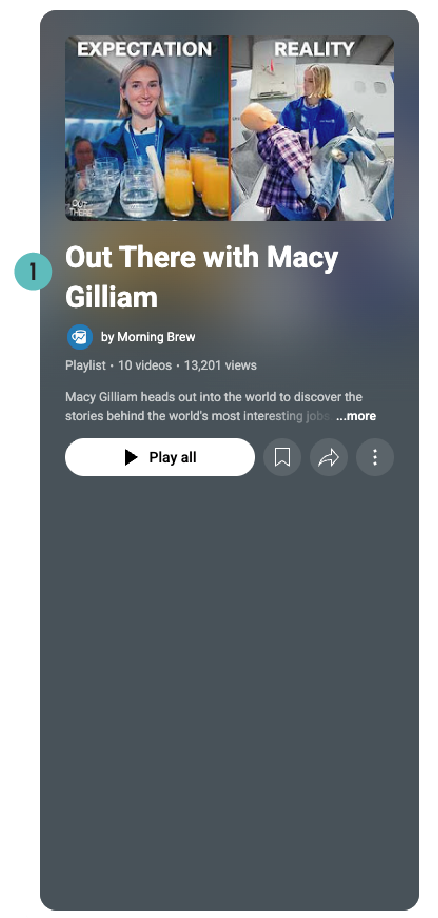
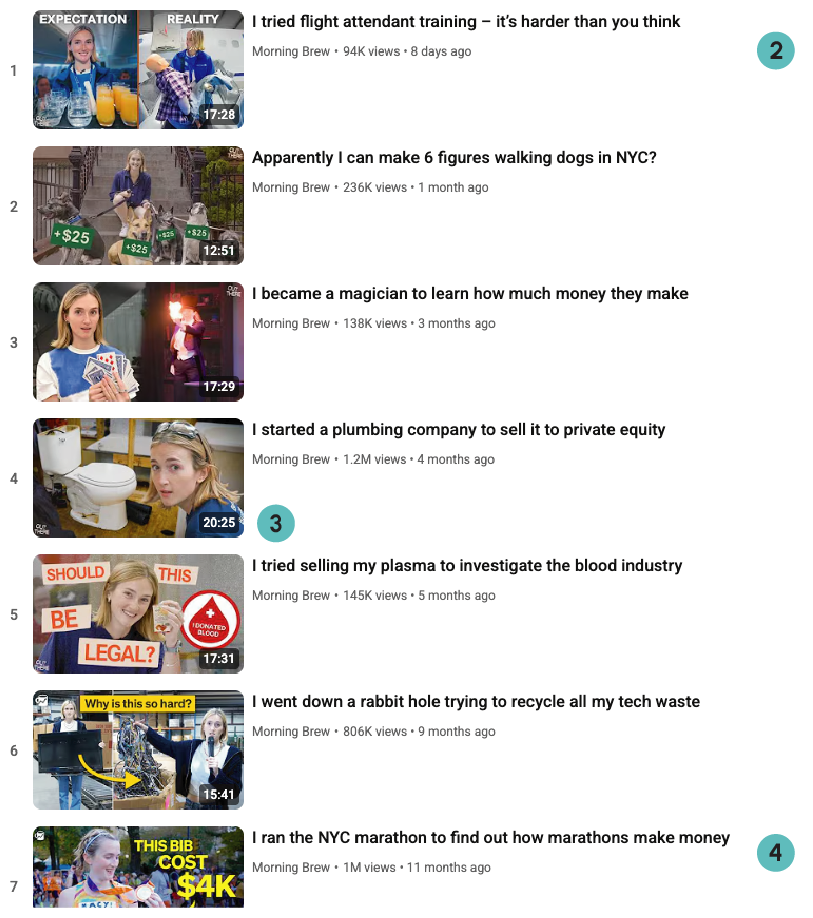
- All episodes revolve around Macy "in the field" learning about a job or an industry that captures the audience's attention
- All episodes are of a similar length (10-20 mins), include interviews with real people and subtle amount of humor
- All episodes have the goal of helping the audience learn something new
Win The First Two Seconds
Grab attention within seconds using hooks and visual cues
Leading news producers know attention is won or lost almost instantly. Within a couple of seconds, viewers decide whether to keep watching or keep scrolling. Successful producers use clear hooks, strong visual cues and distinctive openings to signal the topics and why they are personally significant to the individual (another component of the Ideal News Experience).
- State your topic upfront. Successful news producers make it clear what story or question they are addressing within the first two seconds, in the opening frame, headline text or caption. They use headline‑style leads, question framing, or list logic to make scanning effortless. For example, Lisa Remillard uses captions within her TikTok videos and on the thumbnails to help audiences know as soon as they see her video what she is going to cover. "Lower Gas Prices starting tomorrow (Except California) is one instance of this.
- Use a hook to make people stop and listen. Successful news producers design a hook that captures audience attention
by:
- Using cultural moments and personal relevance. They put themselves in the viewer's shoes and consider which element of the story is most interesting or personal. They then include that within the first few seconds.
- Introducing questions that spark curiosity at the beginning of videos or in thumbnails. For example, The Pioneer always titles episodes in a way that intrigues audiences, such as "Can Trump Stop the War in Ukraine?"
- Challenging assumptions and introducing the answer first. They frame videos by addressing misconceptions or information gaps. ClimateAdam intentionally uses "spoiler alerts" at the beginning of videos to introduce the answer, even if it doesn't go into the details at the top.
- Using visual hooks or imagery. They often show recognizable faces to stop the scroll and capture the audience's attention.
- Adopting a signature opening line. For example, Aaron Parnas, an emerging news producer who covers politics, uses "We have some breaking news…" to help viewers instantly recognize him, even when they are half-watching.
- Build a unique, recognizable visual identity. Successful news producers develop clear visual cues so audiences can instantly identify them in their feeds. This includes consistent clothing, jewelry, background setting or hairstyle that becomes part of their on-screen signature. As James Li explains: "On scrolling platforms, viewers aren't choosing you. The algorithm is serving you up. That means you need something instantly recognisable, whether it's clothing, hairstyle or background. For me, it's a San Diego Padres hat — it helps people spot me right away."
James Li
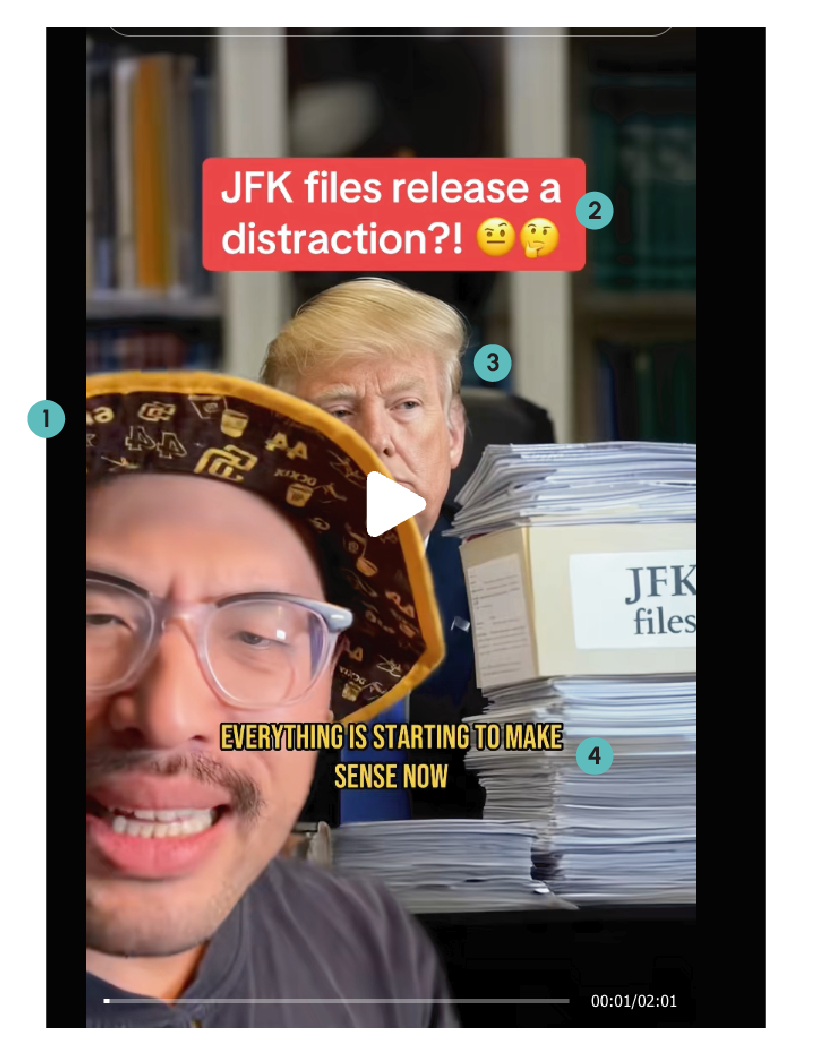
- James Li wears the same bucket hat in all videos to make himself immediately recognizable in feeds
- Makes reference to the topic and asks an open-ended question that captures the audience's attention
- Includes recognizable faces and imagery to draw people into the story
- Makes use of verbal hooks that encourage people to watch on