Case Studies
This page collects our recommendations for news producers that also appear with the explanation of each of the modes of engagement. For more complete context, see those pages.

Passively encountering news among other information
Learn morePackage For The Platform
Package content to suit each platform's rhythm and algorithm
Leading news producers understand they win by owning the first two seconds of a consumer's attention, intentionally packaging their content to fit seamlessly within the Scroll mode on each specific platform. Most decisions about a piece of content are made during those first two seconds. Leading news producers craft repeatable formats to define a recognizable visual identity that flows naturally on social and video feeds yet still delivers clarity, accuracy and distinctiveness to conveniently reach younger audiences (an important part of the Ideal News Experience identified in our previous research). In practice, that means aligning the publishing rhythm, pace, tone, length and style with each platform's norms to maximize algorithmic promotion and audience satisfaction.
Some best practices seen among successful news producers include:
- Post consistently and predictably. The more regularly and predictably content appears, the more likely algorithms are to surface it and users are to recognize and engage with it. Setting a sustainable cadence based on capacity and the type of content produced is key. Breaking news or live coverage may call for multiple posts a day across platforms, while in-depth analysis, features or visual storytelling benefit from a more deliberate cadence. The Daily Aus exemplifies the latter approach. Rather than competing to break stories first, it focuses on clarity and context, publishing explainers through carousel cards or video explainer content. This steady, structured cadence positions The Daily Aus as a trusted, low-noise brand that prioritizes quality comprehension over the quantity of updates.
- Balance the tone to make news entertaining without trivializing
serious events. Some brands employ strategies to make news entertaining, moving away
from the formal style of traditional news organizations. These brands:
- Use humor. Some write sketches (Morning Brew and Local News International) to make the news more approachable. Using satire to mock individuals in power is a way to incorporate humor without making light of stories.
- Leverage personality, authenticity and conversation. They put members of their staff at the center of the story and let them use a conversational and informal tone to explain a story. Zetland describes this as "being like a friend sitting next to you in a pub."
- Approach complex or mundane subjects from unexpected angles to attract audience interest. Journalist Lisa Remillard explored the topic of Federal injunctions through the unusual lens of a judge shutting down "Alligator Alcatraz," for example.
- Be creative with formats. Some brands have found success by experimenting with novel news formats. For example, Quebrando o Tabu uses a quiz format in which a presenter goes onto the streets of Brazil and tests people's knowledge on topics such as women's rights before providing factual answers to raise awareness on undercovered topics.
- Match platform aesthetics. Successful news producers incorporate videos and imagery into their content (e.g. stitching or duet editing), clearly showing it is user-generated content and not overproduced news. They minimize overt branding and use a consistent visual theme and color palette to develop a distinct brand.
- Develop repeatable storytelling templates. Successful news producers identify and refine a storytelling format that
consistently drives engagement, then iterate over time to improve performance.
They treat the template as a set of ingredients — tone, language, appearance,
length, style, people and visuals — that they reuse across content. For
example, Local News International follows a consistent creative structure:
- Central personality: "Dave is a constant… He's the way into a story for a lot of people."
- Skit element and fictional characters: "99% are skit-based."
- Playing the viewer: "Dave almost always plays the viewer; he's the one trying to learn."
- Length and speed: "We intentionally try to cover as much of a story as we possibly can in like 38 to 41 seconds."
- Tone: "We want to use relatable, direct language that is free from traditional media constraints."
Developing repeatable templates is applicable on other platforms:
- Instagram: El Surtidor's Six to eight card visual explainers blend illustration and data storytelling.
- YouTube: HugoDécrypte's Actus du Jour is a daily 15 to 20 minute video summarizing the main news stories with an accessible tone.
- Spotify: Café da Manhã is a 25 to 30 minute weekday news briefings from Folha de S.Paulo.
Local News International
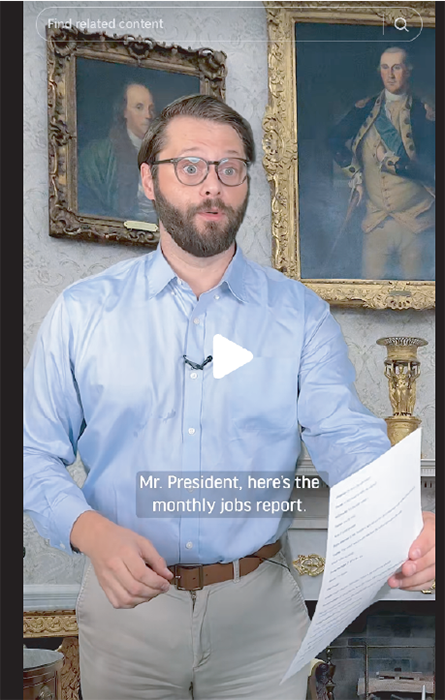
Within the first second, you know what the story is about and recognize Dave Jorgenson
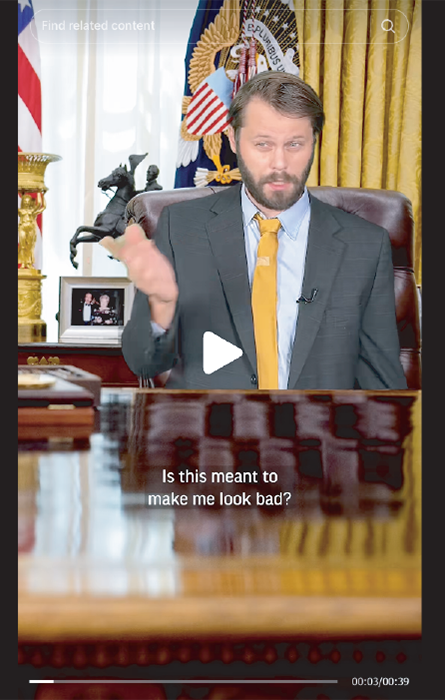
Caricatures of famous leaders (e.g. Donald Trump) make reference to, and satirize, decision making
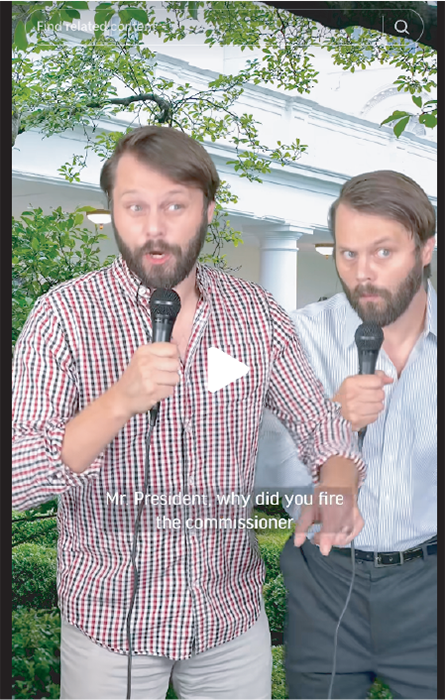
Other characters add comedic effect and allow the video to anticipate and address audience questions
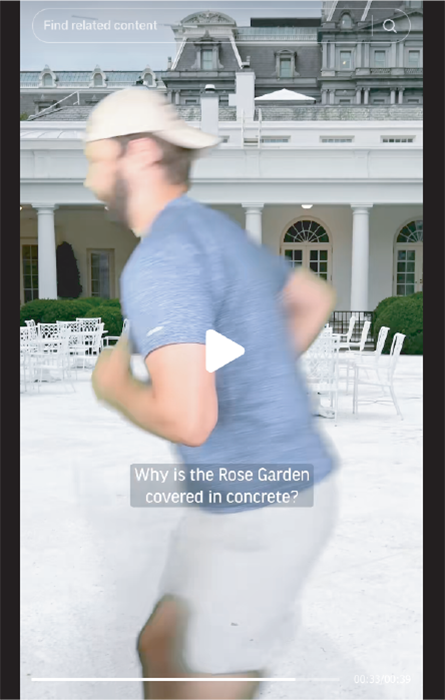
Jokes about stories in the social zeitgeist add humor and increase the likelihood of peer-to-peer sharing
Select Stories And Topics That Break Through
Select stories that work for the platform and in storytelling templates
Leading news producers understand that not all stories (or topics) work on social or video platforms. Rather than shoehorning topics or stories into a social or video setting, these producers carefully select stories they know will perform within their storytelling template.
- Reverse the journalism process. Successful news producers start with the storytelling template — the tone, language, appearance, length, style, people and visuals — and then select a story that complements the template. As the Local News International Team explained, they ask themselves, "What are the big stories today? Do we or Dave have a unique take on this? Does he have a way of making it approachable, interesting or humorous? We definitely don't try to just cover the main headlines." Similarly, Macy Gilliam has created an "Out There" series, which is now a separate franchise within Morning Brew where she spends a day with someone while they do their job. Her approach is distinctive not only for the topics she chooses but also in how she reverses the process. For instance, rather than simply telling viewers that hotdog stands are a tough business in New York because of all the permits required, she spends a day with a hotdog vendor to truly understand the job and the people behind it and creates an original piece of informative and heartwarming content.
- Choose the right story for the platform. Successful news producers recognize that stories that perform well on social and video platforms typically evoke emotion — curiosity, hope, anger, joy. Human or emotional narratives perform best on visual platforms such as TikTok and Instagram, while complex stories or those with multiple perspectives benefit from the space and pacing of YouTube or newsletters. For example, James Li uses YouTube videos to debunk myths that require complex investigation, while on TikTok he focuses more on breaking news events. Short-form clips, quotes or visual hooks from longer pieces can be repurposed for social platforms to draw audiences toward more in-depth reporting using teasers, highlights or explainer cuts that bridge the gap between immediacy and depth. For example, The Rest is Politics uses short clips from its longer podcast episodes on social platforms to spotlight moments of humor, disagreement or emotion between hosts Alastair Campbell and Rory Stewart. These snippets often capture relatable or surprising insights about current affairs and serve as conversational hooks that drive audiences to listen to the full episode.
Morning Brew "Out There" with Macy Gilliam
- The storytelling template is formalized by being given its own minibrand, making it easily discoverable
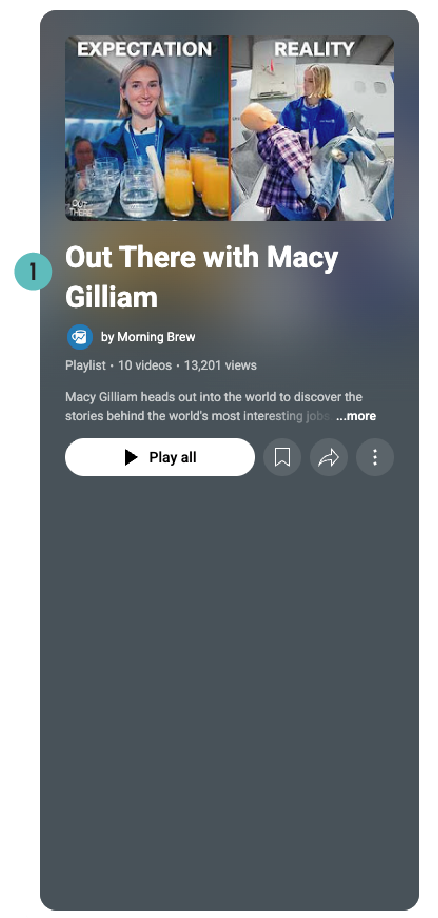
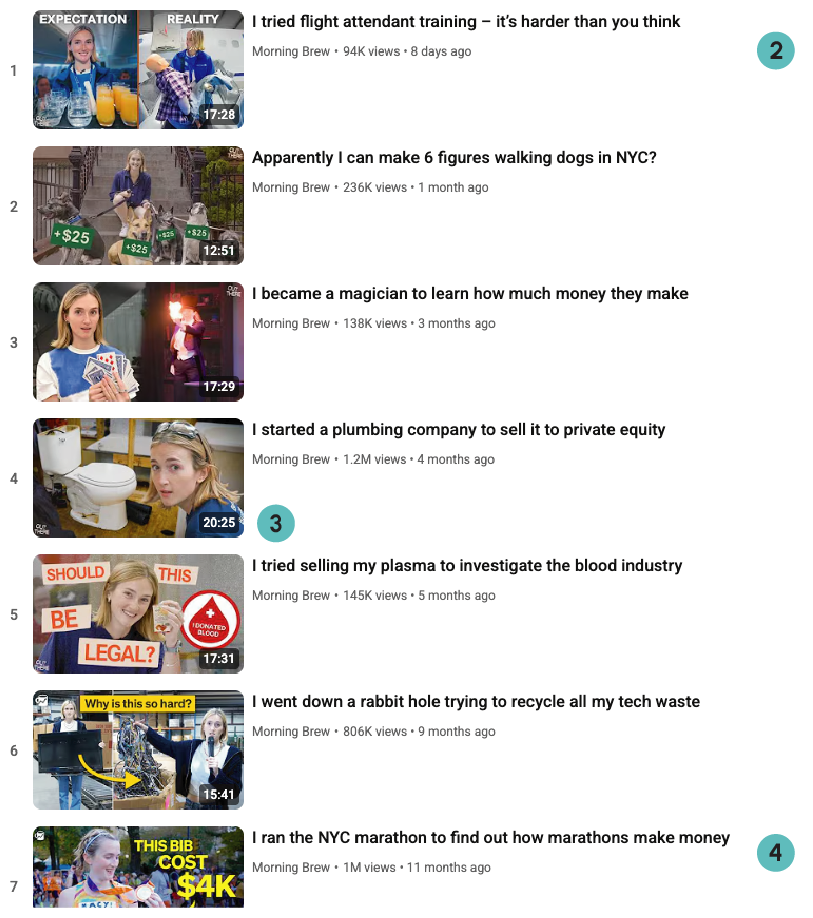
- All episodes revolve around Macy "in the field" learning about a job or an industry that captures the audience's attention
- All episodes are of a similar length (10-20 mins), include interviews with real people and subtle amount of humor
- All episodes have the goal of helping the audience learn something new
Win The First Two Seconds
Grab attention within seconds using hooks and visual cues
Leading news producers know attention is won or lost almost instantly. Within a couple of seconds, viewers decide whether to keep watching or keep scrolling. Successful producers use clear hooks, strong visual cues and distinctive openings to signal the topics and why they are personally significant to the individual (another component of the Ideal News Experience).
- State your topic upfront. Successful news producers make it clear what story or question they are addressing within the first two seconds, in the opening frame, headline text or caption. They use headline‑style leads, question framing, or list logic to make scanning effortless. For example, Lisa Remillard uses captions within her TikTok videos and on the thumbnails to help audiences know as soon as they see her video what she is going to cover. "Lower Gas Prices starting tomorrow (Except California) is one instance of this.
- Use a hook to make people stop and listen. Successful news producers design a hook that captures audience attention
by:
- Using cultural moments and personal relevance. They put themselves in the viewer's shoes and consider which element of the story is most interesting or personal. They then include that within the first few seconds.
- Introducing questions that spark curiosity at the beginning of videos or in thumbnails. For example, The Pioneer always titles episodes in a way that intrigues audiences, such as "Can Trump Stop the War in Ukraine?"
- Challenging assumptions and introducing the answer first. They frame videos by addressing misconceptions or information gaps. ClimateAdam intentionally uses "spoiler alerts" at the beginning of videos to introduce the answer, even if it doesn't go into the details at the top.
- Using visual hooks or imagery. They often show recognizable faces to stop the scroll and capture the audience's attention.
- Adopting a signature opening line. For example, Aaron Parnas, an emerging news producer who covers politics, uses "We have some breaking news…" to help viewers instantly recognize him, even when they are half-watching.
- Build a unique, recognizable visual identity. Successful news producers develop clear visual cues so audiences can instantly identify them in their feeds. This includes consistent clothing, jewelry, background setting or hairstyle that becomes part of their on-screen signature. As James Li explains: "On scrolling platforms, viewers aren't choosing you. The algorithm is serving you up. That means you need something instantly recognisable, whether it's clothing, hairstyle or background. For me, it's a San Diego Padres hat — it helps people spot me right away."
James Li
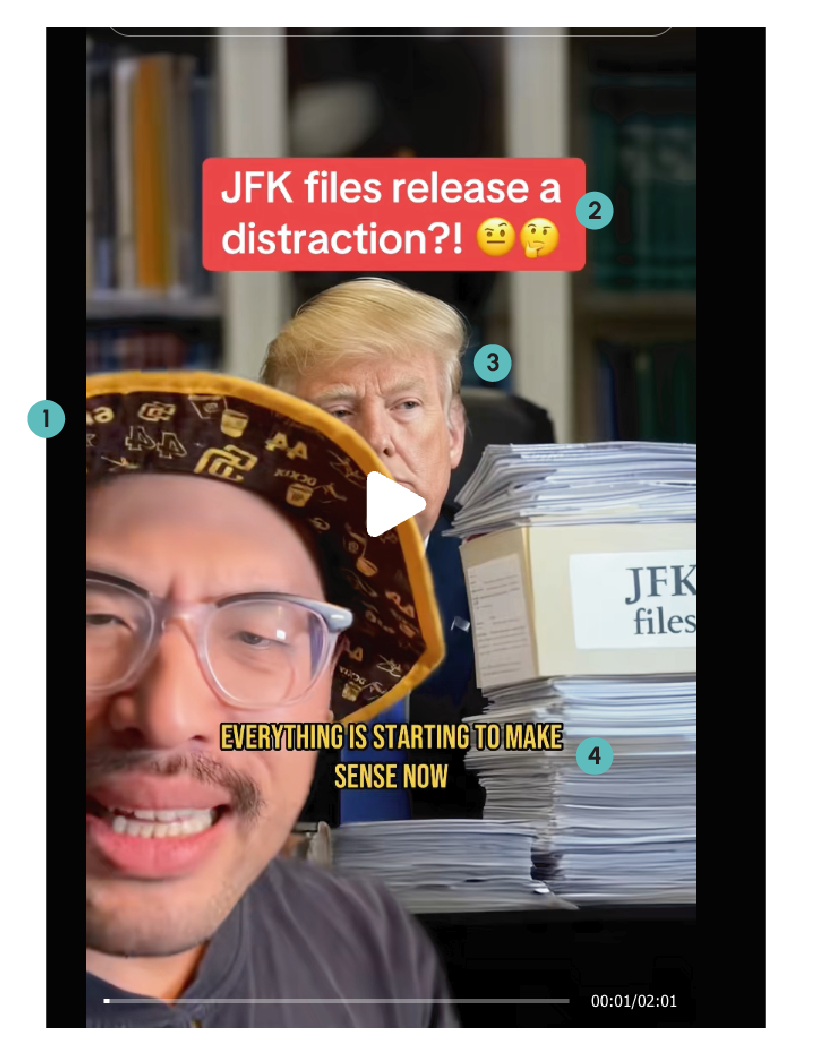
- James Li wears the same bucket hat in all videos to make himself immediately recognizable in feeds
- Makes reference to the topic and asks an open-ended question that captures the audience's attention
- Includes recognizable faces and imagery to draw people into the story
- Makes use of verbal hooks that encourage people to watch on

Actively looking for news or even specific news topics
Learn moreGuide Discovery
Ease discovery through thoughtful curation and an intuitive interface
Leading news producers facilitate Seek mode by helping their audiences find content that feels purposeful and personally relevant while meeting the desire for convenience. They demonstrate a strong understanding of what their readers are looking for and show clear editorial intent and judgment that aligns with those needs, supported by product design that makes discovery effortless and intuitive.
- Deliver curated briefings. These leading news producers apply editorial judgment to select and package news stories that matter most to their audience. They deliver them consistently across channels (for example, newsletters or audio) and times of the day to build routine and repeat engagement. The Pioneer Briefing — the flagship audio product from The Pioneer — capitalizes well on this approach. Framed as "news without noise," it filters the day's events into five essential stories and two deeper explorations, designed to leave listeners feeling informed and educated.
- Offer live formats that capitalize on immediate interest. Successful news producers use real-time channels, such as on-site live blogs and social live streams, to blend updates, evidence, imagery and short explanations for major unfolding events. The Guardian's live blogs exemplify this principle. Prominent "Key events" and "What we know so far" cards ground readers from the outset, while a mix of rapid updates, contextual analysis and multimedia maintains clarity and momentum throughout coverage. Each post carries the journalist's name and icon, lending a human presence and approachable tone that makes the coverage feel dynamic. The format manages to be both fast and coherent, delivering the urgency of live news without sacrificing clarity or depth.
- Create seamless, intelligent discovery experiences. Leading news producers optimize on-site and in-app search to support both keyword and semantic queries, with filters for date, author and format, and options to sort by relevance or recency. Advanced news producers extend this with generative AI tools that provide summarized, citation-backed answers based on verified reporting. For example, the Financial Times has built its own GenAI Chatbot, “Ask FT,” that uses Retrieval-Augmented Generation (RAG), first retrieving relevant snippets from the Financial Times article archive and then using an LLM to generate an answer based solely on that trusted, retrieved content.
- Design intuitive interfaces within owned and operated platforms. Successful news producers keep interfaces low-clutter, with clear signposts for key themes on landing pages. Where possible, they integrate advertising that feels native and non-disruptive. A good illustration of this principle is Inshorts and its clean, card-based mobile interface. Each story is distilled into a 60-word summary, allowing users to absorb headlines at a glance while maintaining narrative coherence. The swipe-based navigation reinforces momentum, reducing friction and matching mobile-first reading habits. For deeper engagement, each card expands into a full-length article or related coverage, giving users seamless control over how much detail they consume.
Inshorts
- Inshorts App landing page takes you directly to a story, as opposed to a homepage - encouraging instantaneous discovery and reducing overwhelm/choice
- Social cards are designed to intentionally avoid clutter and only share key information (with the option to 'tap to know more')
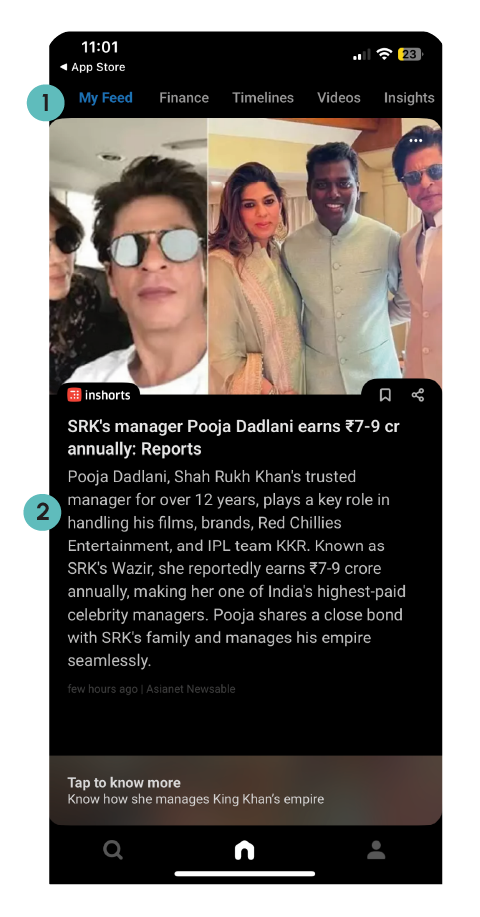
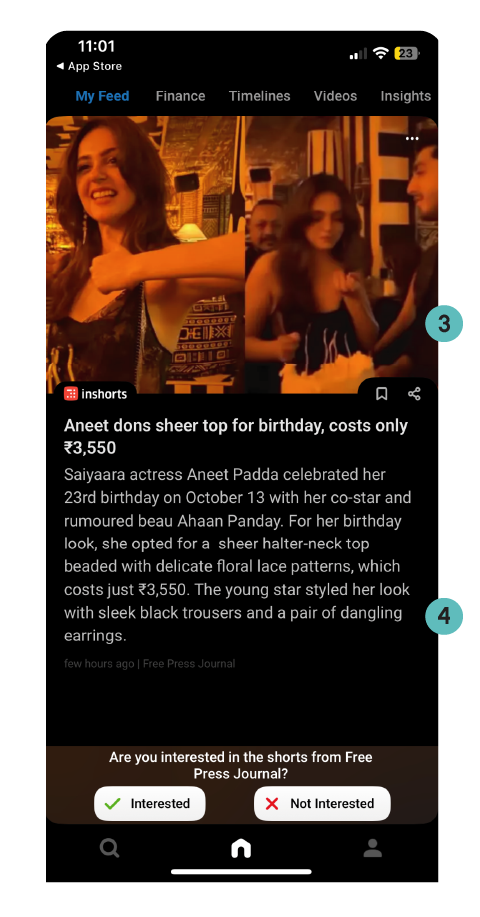
- All story cards follow the exact same format (image size, amount of text, citations)
- Users can simply 'flick up' to go to the next story (mirroring behavior on popular social platforms like TikTok)
Give Control
Create ways for users to customize their news experience to improve discoverability
Leading news producers provide customization features within owned and operated platforms that let audiences shape their experiences of the news. In practice, customization elevates what matters for each person and tunes delivery to individual preferences so content is immediately relevant and worth attention.
- Successful news producers enable meaningful personalization and control. They allow readers to follow topics or authors and use these preferences to shape personalized feeds across email, websites and apps. The Verge's follow buttons create a custom homepage and daily email digest tailored to each user. As Jacob Kastrenakes, executive editor, explains: "You'll notice this feels a lot like the way an RSS feed or a social network works. That's very much by design. Everything is a feed now, and everything is customizable. We think our site should work the same way. What you're seeing today is the first step toward adding deeper personalisation features." In addition, top news producers make it easy for audiences to update preferences or mute content they no longer want via inline chips, a central preference center or gentle prompts.
- Successful news producers allow audiences to tailor content to their preferred format, whether reading, listening or watching. Zetland offers narrated versions of its articles, read by the reporters themselves. These leading news producers sometimes leverage generative AI to produce alternative formats at relatively low cost. For example, the Financial Times partners with ElevenLabs to produce lifelike audio versions of articles. News producers are also using AI to offer customizable summaries of content. Particle News, an AI-powered news aggregation app, allows users to choose from a selection of AI-generated summaries that include "The 5Ws," who, what, when, where, why, and "Opposite Sides," which offers contrasting viewpoints on a story.
The Verge
- Users can select authors or topics that they are interested in
- Topic categories are intentionally granular and more specific than section headers
- Preferences are stored - and can be updated - via a central account page
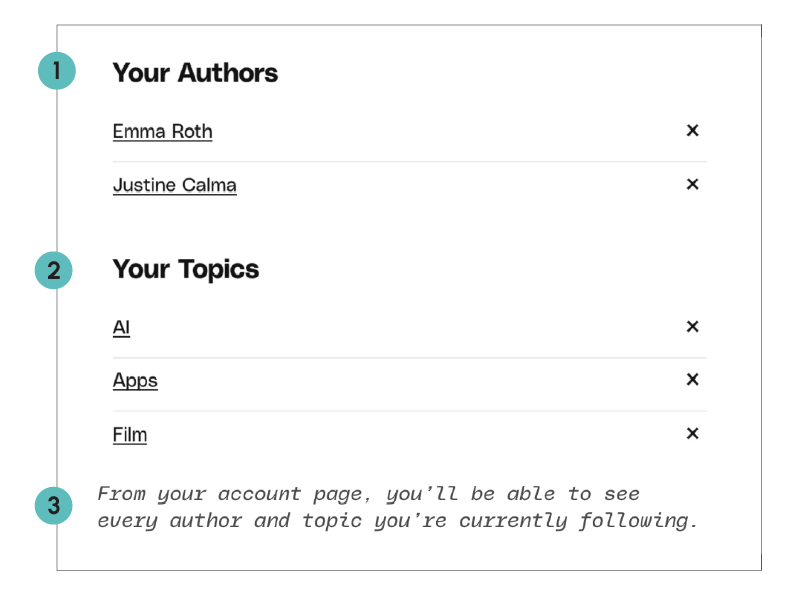
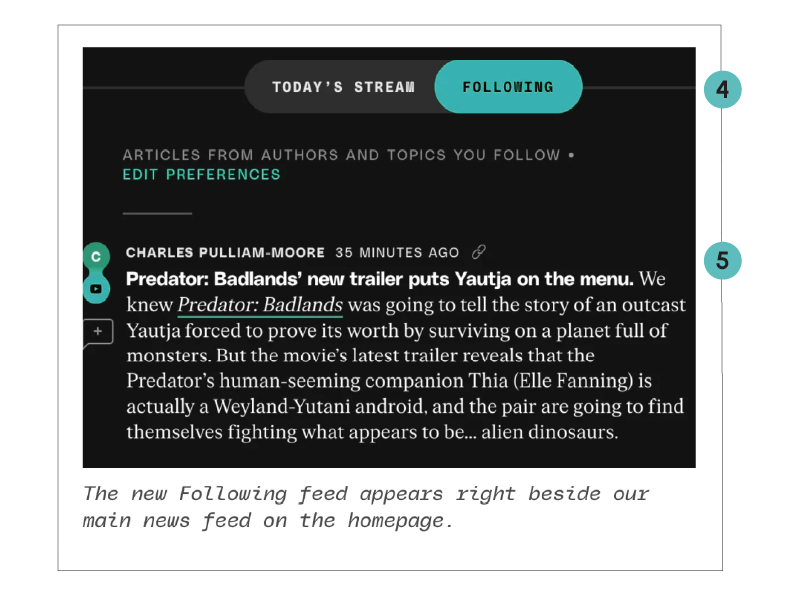
- The 'Following' page is a separate location where audiences can see their customized topics / authors
- Information is presented as a feed with summaries and the opportunity to click-through to learn more
Particle News
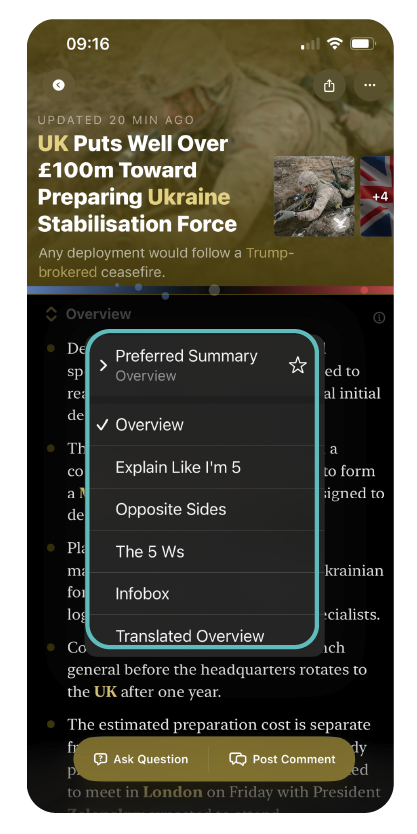
- Using AI, Particle gives readers the option of displaying a news story in 6 different ways
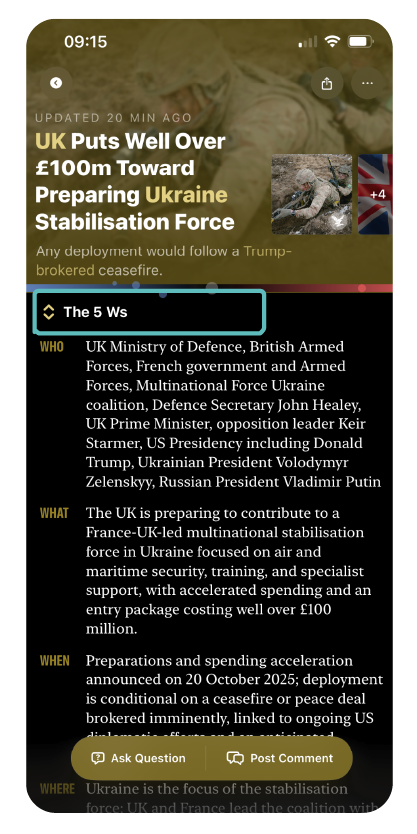
- The 5 Ws (Who, What, When, Where, Why)
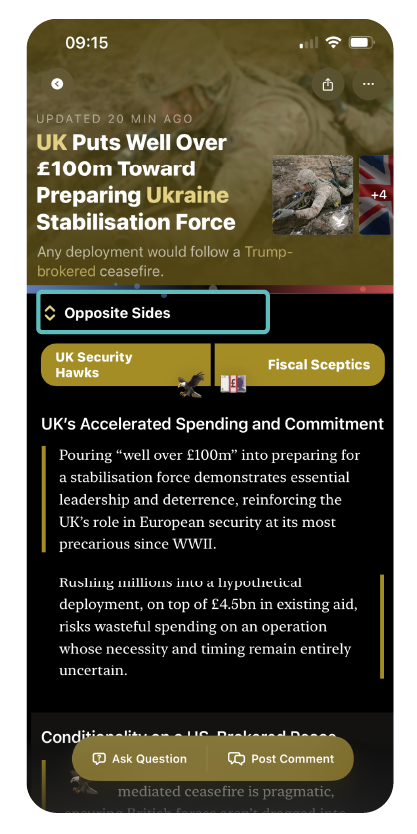
- Opposite takes on the same story
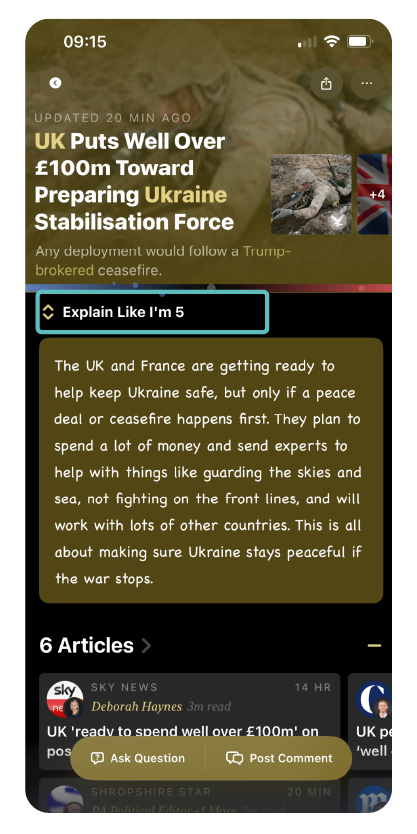
- Explain like I'm 5, for simple explanation
Personalize with Purpose
Blend user control and intelligent personalization
Leading news producers facilitate Seek mode by balancing editorially led curation, audience-led customization, and data-driven personalization to meet individuals' need to consume topics of personal significance. Younger audiences seek discovery that feels guided but open — an experience that recognizes their interests while continually serving them new perspectives and ideas. This is typically achieved through a carefully designed onboarding journey.
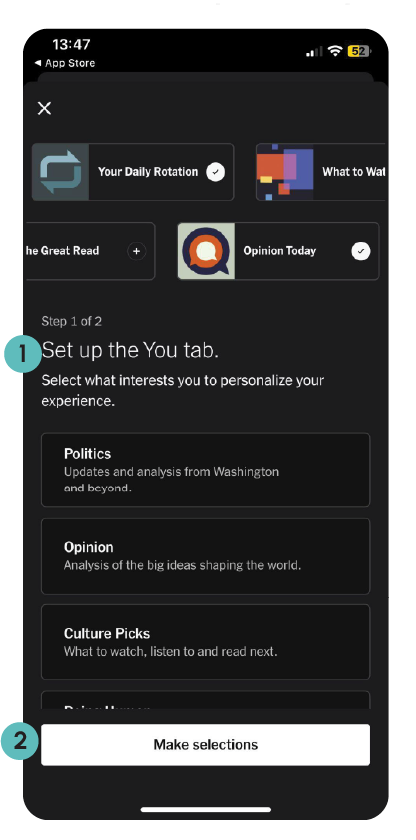
- Recommend content that is likely to be of interest to an individual. Leading news producers combine behavioral signals (what they consume) with demographics (location, age) to inform content recommendations. They label personalized recommendations — for example, "because you read about climate policy" — to help users understand and trust personalization logic. They also allow users to opt out of content personalization via account settings or preferences. For example, The New York Times recently made "one of its biggest changes" by launching a bottom navigation to the "You" tab customized by a user's behavior. As Kristen Dudish, vice president of product design, explained: "We wanted to balance discovery with finding something to read or watch based on their habits or the affinities that people have for specific sections." The New York Times also offers personalization in the Today feed, though it is an "80/20 split between editorial curation and personalization".
The New York Times
- To set up the You tab, NYT asks for your interests and preferences to inform algorithmic selection
- Options include newsletters, audio and video formats to cater to different audience preferences
"You" Set Up Journey
"You" Feed Page
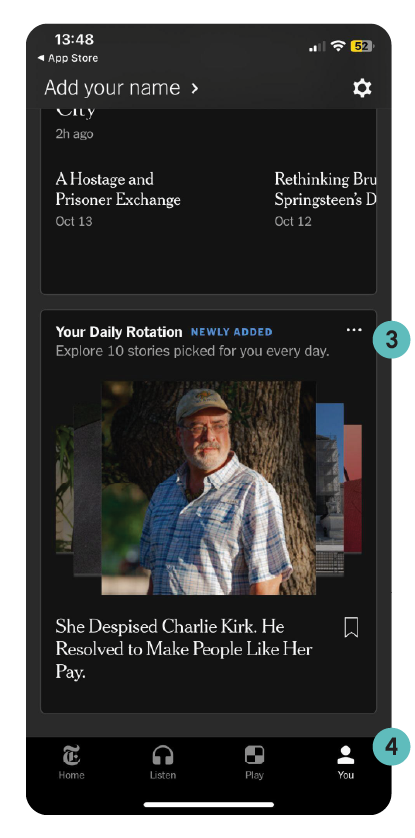
- "Your Daily Rotation" offers 10 personalized stories each day based on your interests, behaviors and demographics
- The 'You' tab is a permanent bottom navigation feature to encourage discovery and engagement

Receiving news from trusted people and sources
Learn moreSync with Habits
Design delivery around audience routines and preferences, not output cycle
Leading news producers put users first by delivering critical, relevant information that fits naturally into their day. Delivery feels timely and considerate, not intrusive. They give users control over what they receive and when, transforming push alerts into a helpful service. This also reflects the growing demand for customizable experiences, echoing our previous finding of a convenience gap in how audiences find news.
Offer Customizable Delivery
Top news producers let audiences choose which topics they receive updates on — such as breaking news, lifestyle or tech — and also the specific journalist, format or keywords they care about most. Some news consumers may want alerts tied to a favorite columnist, while others desire a recurring series, data stories or a specific theme. Successful news producers provide multiple delivery options, from app notifications, newsletter and SMS to messaging broadcasts on platforms such as WhatsApp.
Examples:
- The Guardian's myGuardian lets readers follow individual journalists, newsletters, podcasts and specific formats and receive dedicated push notifications, rather than only general "breaking news" or topic alerts.
- Michael MacLeod, the solo creator of The Edinburgh Minute, is planning to build section filters on his newsletters so readers can "take the full hose" or customize their newsletter to specific modules.
- Politico has returned to SMS texting to reach busy lawmakers and political staff with “personal and urgent” news to cut through the clutter of email inboxes and notifications.
Leverage Smart Scheduling by Aligning Delivery to Daily Habits
A well-timed morning briefing or pre-commute digest feels useful and builds routine; predictable timing becomes a form of trust. As Moritz Klein of The Pioneer notes, "Most people… will just start the podcast because it's part of their morning routine or their commute. It's super key that we land at 6 a.m." Being truly user-centric also means managing alert fatigue by sending fewer, better-timed notifications that feel essential rather than intrusive.
Examples:
- The Times of London caps its alerts at four per day to avoid over-communication.
- The Financial Times uses a hybrid model — broad news alerts for all users and personalized 5 p.m. updates for subscribers, complemented by morning briefings and weekend long-read digests.
- The Hindu has recently introduced a personalized push-notification strategy that sends alerts at optimal times based on each user's past behavior. This has resulted in an eight-fold increase in click-through rates.
The Guardian
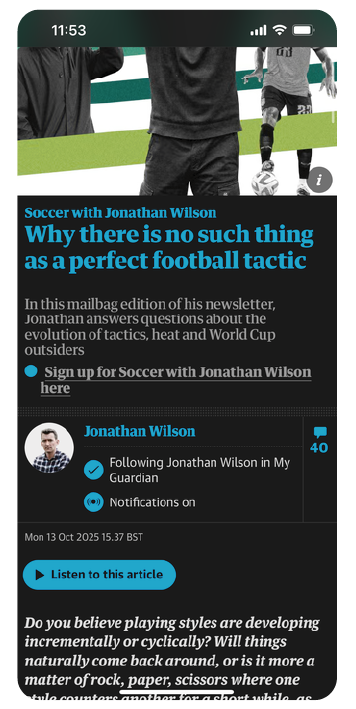
In article, The Guardian allows you to follow specific topics and authors, and turn on dedicated notifications
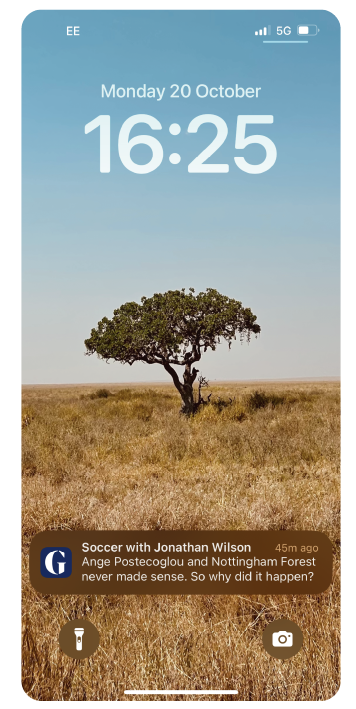
Anytime the author (in this case) Jonathan Wilson releases a new article, the user receives an automatic push notification
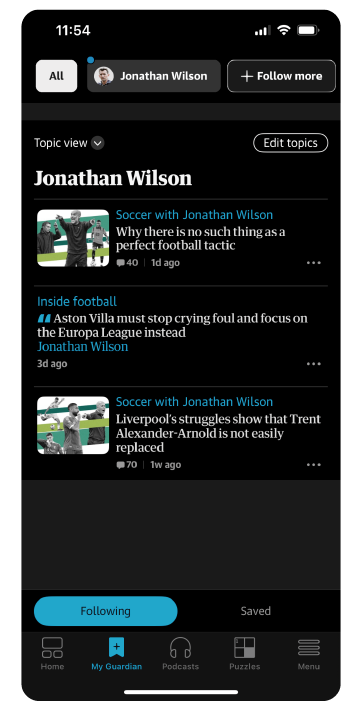
A centralized myGuardian hub allows users to review their followed topics / authors / newsletters and adjust notifications to personal preferences
Build for Completion
Make subscribe content dense and easy to complete
Leading news producers understand that many consumers interact with notifications, alerts, newsletters and chats in short time windows, between meetings or the first thing after waking up. This small window calls for information density and quick-to-complete content. Our previous research highlighted information density as key to closing the convenience gap — a need that has only grown as more people consume news via social media.
Standardize the Skeleton for Instant Scanning
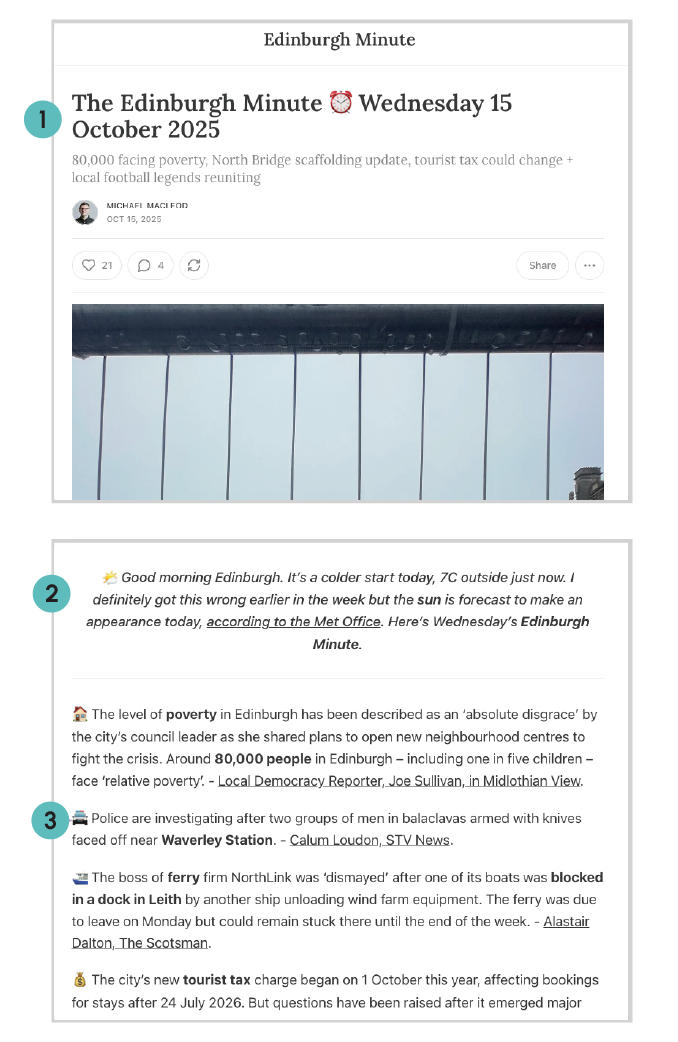
Successful news producers use a consistent, predictable layout so readers know exactly where to look — an opening line that explains the one big thing they will take away, clear section headers, visual signposts (emojis or icons), bullets, and links. The Edinburgh Minute exemplifies this discipline. Every issue follows the same structure, ordered by impact on daily life, participation and light relief. As founder Michael MacLeod notes, "I will always keep this exact same structure so that it is scannable… I'll even include an introductory note to help people skip to the most relevant part." This is tapping into the 1/5/10 strategy outlined by newsletter specialist Dan Oshinsky. In this theory, the key insight comes first, deeper content follows, and a bite-sized bonus section finishes. This consistency gives readers confidence and makes attention a habit. Tone then completes the experience. Hard news formats are direct, neutral and fact-led, while personality-driven newsletters tend to be warmer and conversational.
Keep It Short, but Provide Options to Go Deeper
Top news producers include only a short headline for alerts and notifications, with an image, a subject line of six words or less. They make newsletters readable in less than three minutes, and they keep broadcast messages short — one to three sentences per update. These news producers give people the option to learn more (e.g. via external links).
Example: Deepit Purkayastha, co-founder and CEO of Inshorts, notes that to meet this user need, they have recently "launched something known as daily digests of your interests. ... You tell me what are the two, three or five things that you want a sense of completion on every day [and we will notify you of those]." Inshorts also allows people to tap in the app to click on specific story cards that they are interested in to go deeper on a topic.
The Edinburgh Minute
- Plain language updates on the key contents of the newsletter
- A softer tone for the introduction usually focusing on weather or the author's mood
- A long list of key stories, each with two sentences max, along with an emoji to introduce the topic, and a follow-up link
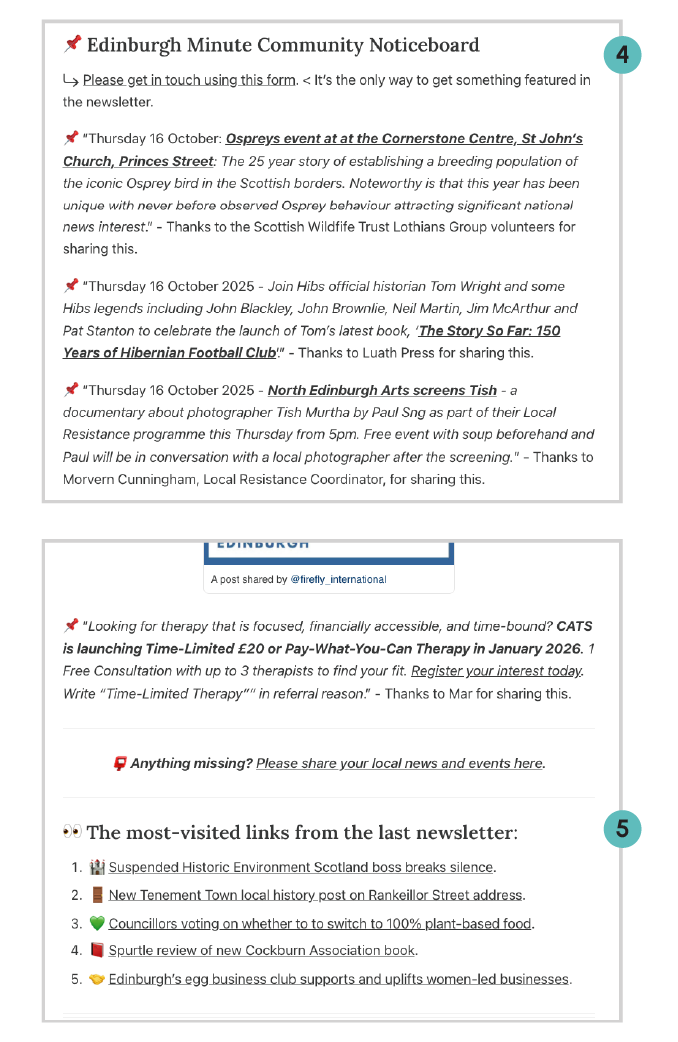
- The Community Noticeboard after the news, where members can share links to events and things happening in the city
- Most-visited links from last newsletter, to help people stay up to date in case they miss any edition
Checking and verifying news stories
Learn moreMeet Your Users
Deliver promptly, meeting users where they are and when they expect
Leading news producers facilitate substantiation by publishing information promptly after significant events occur or are reported. Next gen audiences expect emerging news producers to be on top of and help their audiences stay on top of timely news. They substantiate information on the platforms where their audiences spend their time.
- Prioritize accuracy and relevance over speed or volume. Leading news producers publish as soon as information is verified, ideally on the same day or within a few hours, but never at the expense of accuracy. Victor Marcello, co-founder of Quebrando o Tabu (QoT), a Brazilian digital media organization known for accessible, social-first journalism, explained: "We have a very deep understanding that we don't consider ourselves a news agency… We are not trying to be the first to provide information; instead, we focus on digesting and explaining the facts for the user." Leading news producers without significant team size and capacity avoid trying to substantiate every event. Instead, they focus on timely stories in which the issue has broad social or civic importance and there is a risk of misinformation or disinformation.
- Push information directly to audiences. Successful news producers build products that fact-check information or directly answer audience questions, including custom chatbots, WhatsApp communities or push notifications. For example, after regularly receiving emails and messages from its audience asking if certain facts in different pieces of content were true, Aos Fatos created a self-service chatbot (FátimaGPT) available across WhatsApp, Telegram and the web that allows audiences to fact-check information in the moment.
Aos Fatos
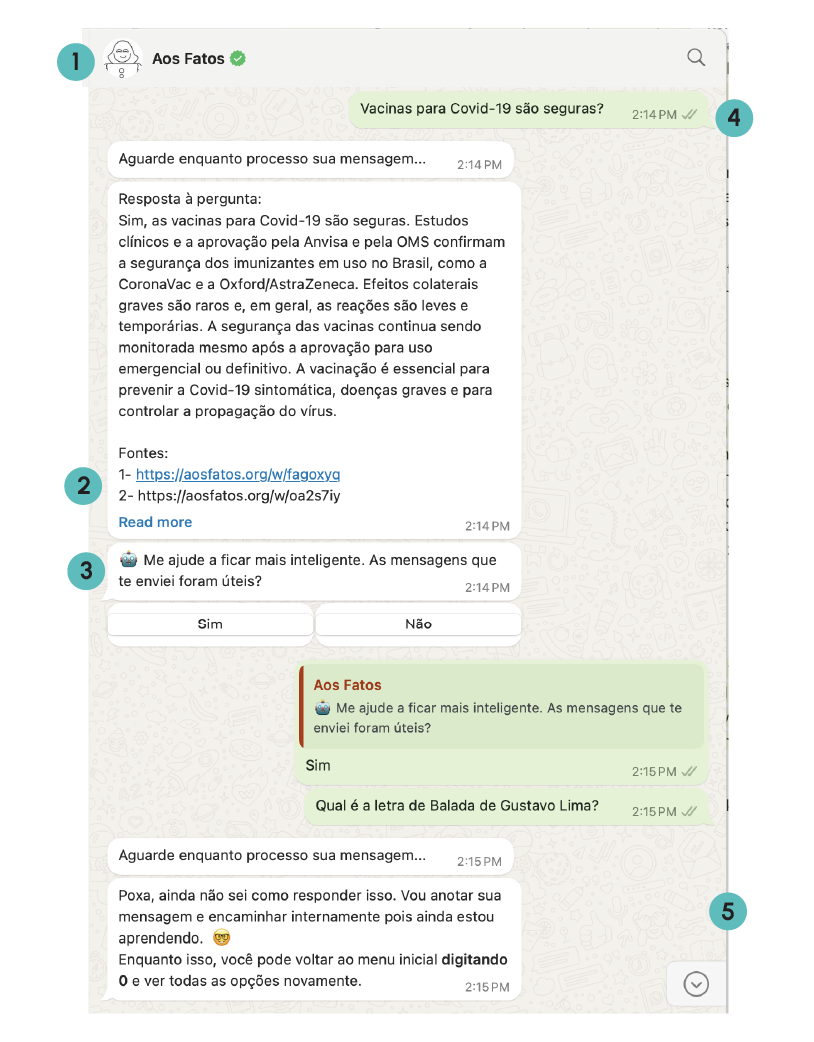
- Integration with WhatsApp for convenience
- Includes citation and links
- "Was this useful" AI reinforcement learning
- Ability to ask free-text open questions
- 'I don't know how to answer that' response if no relevant materials are returned via Retrieval-Augmented Generation
Lead With Facts
Start with the most important information and prioritize clarity
Leading news producers promote substantiation by delivering information audiences need for verification. In practice, this means providing essential factual information in a familiar, easy-to-consume format.
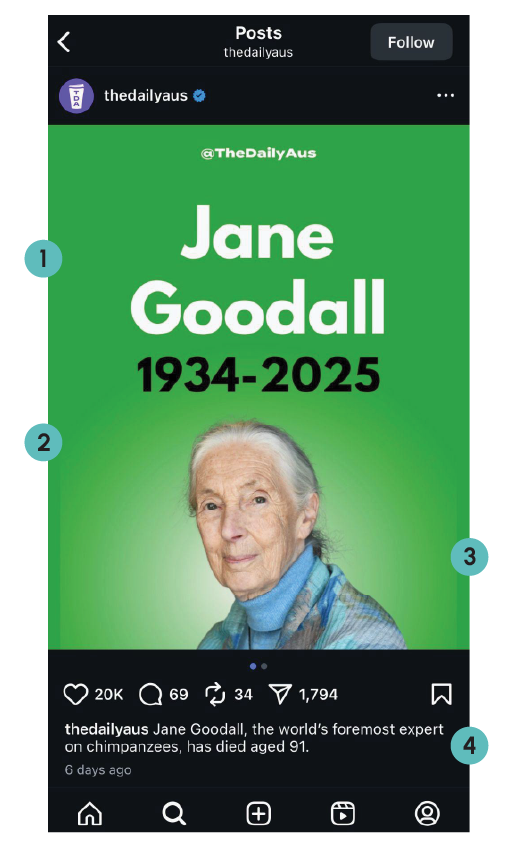
- Start with the claim. Successful news producers make it immediately obvious to users what story they are substantiating. For example, The Daily Aus uses Instagram Carousels in which the first card and caption tell the audience exactly what has happened ("Jane Goodall, the world's foremost expert on chimpanzees, has died aged 91"). As founder Sam Koslowski told us, "We believe in giving people the facts and information and explaining what it all means in as simple a way as possible, so that people can make their own decisions from there… We want to help everyone start from the same spot [of shared truths]."
- Create quick, easily digestible formats. Successful news producers use consistent templates to make information consumption fast and effortless. These templates include bullet-pointed slide carousels, short videos, or 50–100 word news cards. They write in a clear, accessible style that prioritizes understanding over analysis and use straightforward vocabulary, short sentences and paragraphs, and a neutral tone with little or no humor. As Tatton Spiller, founder of Simple Politics (SP), explained: "If you want hard-hitting journalism, we're not the page for you. ... If you just want a human friend talking you through what's going on, that's what SP is and that's where SP lives."
The Daily Aus
- Simple, very short, to-the-point title
- Plenty of empty space to avoid information overload
- Image/photo to further substantiate what happened / who was affected
- Brief descriptive sentence in the caption
Instagram Card 1
Instagram Card 2
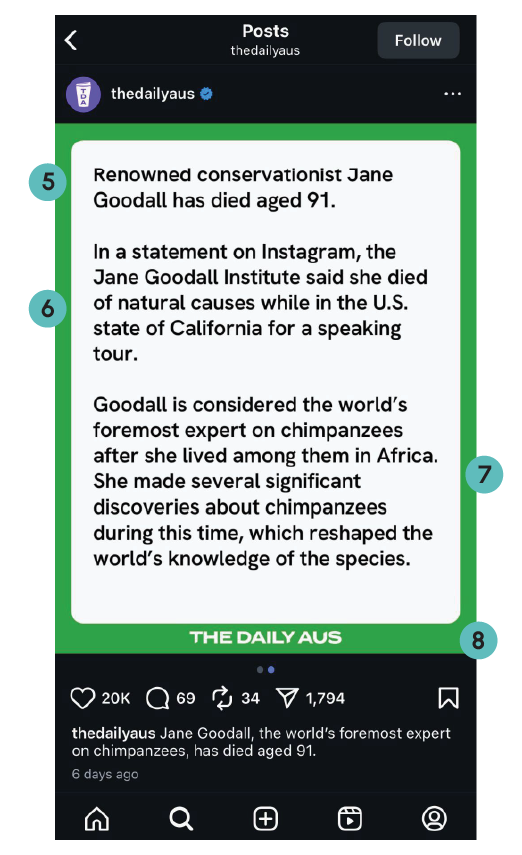
- Reiteration of what happened (in case people only see Card 2)
- Supporting evidence for the story
- Short context explanation
- Branding, in case screenshotted or sent
Show Your Work
Include evidence and show your process
Leading news producers facilitate substantiation by including information directly from the original source and making it available to the audience. This includes documents, datasets, original posts, video or audio. The point is to provide "receipts, not rhetoric," and to teach by showing people information rather than telling them.
- Stitch primary source materials into the content. Leading news producers clip or duet videos/audio, overlay screenshots of documents and include images so audiences can self-verify. UnderTheDeskNews often presents sources behind the presenter, such as maps of military facilities, to promote substantiation. These successful news producers clearly annotate from where information has come using overlays on videos or references in text, and they include links in captions and bios. TLDR News provides a full list of sources under each of its videos and categorizes them into sections that include links to the original materials. Equally important, these successful news producers are transparent when uncertain. They clearly state what has not been verified, avoid speculation and update or annotate previous posts as facts become clear. Akash Banerjee, creator of The Deshbhakt, follows this principle in livestreams by openly acknowledging when information is incomplete or outside his expertise, building credibility through honesty and by avoiding overconfidence.
- Show your working. Successful news producers speak in the first person to make the verification visible and relatable. For example, they say, "In this video, we found an anomaly" before explaining the methods used to confirm or challenge a claim. They walk audiences through each step of their process, such as reverse image searches, metadata checks, open-source database retrieval and data analysis. They also demonstrate how evidence was gathered and interpreted to help audiences understand the rigor and the limitations of the work. Aos Fatos provides a strong example of this practice. It publishes "all the sources that we used to subsidise our investigation and our fact checks. We also give the readers a brief review of how the investigation was conducted from the start to the end, which tools we used, what data we accessed and what decisions we made. This allows our readers to make a full assessment of how journalism is made."
UnderTheDeskNews
Address the truth
00:00 - 00:04
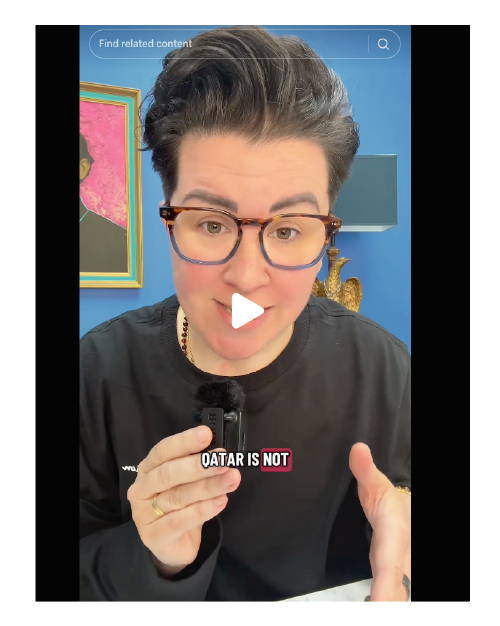
Transcription excerpt: 'Facts matter, Qatar is not building an air force base in Idaho'
Listen to the source
00:16 - 00:20
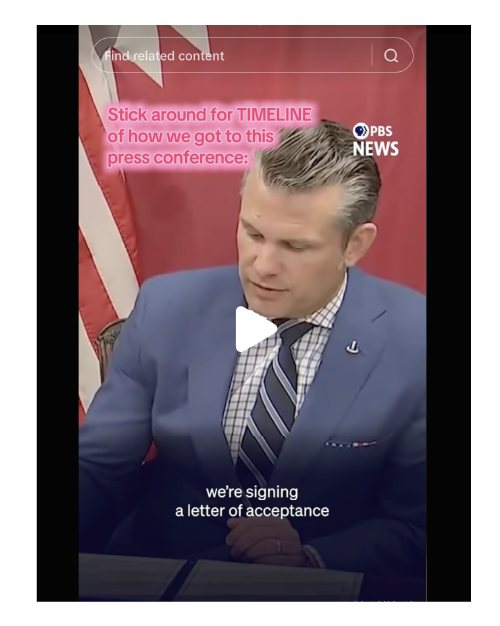
Transcription excerpt: "Listen for yourselves about what Pete Hesgeth had to say about the facility"
Show the evidence
00:35 - 00:45
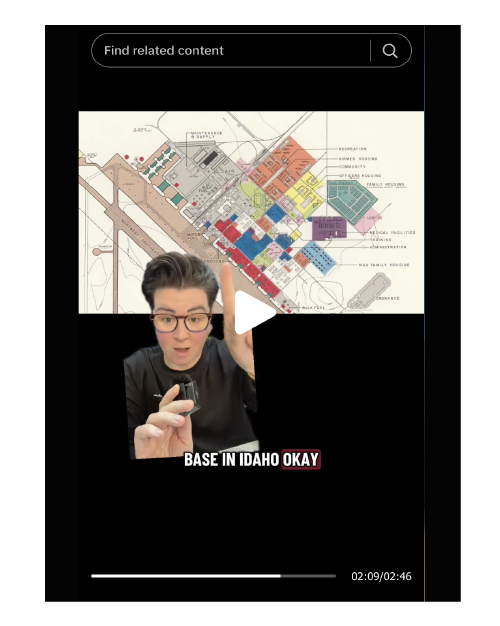
Transcription excerpt: 'Here is a publicly available map that shows the facility'

Deep-diving into a particular topic or ongoing story to build knowledge
Learn moreShow Interest
Highlight personal interest in a story and share what was learned along the way
Leading news producers understand that people want to learn from passionate individuals. To do that, these producers share their personal curiosities, professional experiences, gaps in knowledge and occasional errors as part of the learning journey. This openness becomes a teaching device. It also addresses a deeper shift we identified in our previous research: Audiences feel greater affinity for news producers who come across as family or friends rather than distant teachers.
- Open with the motive, not just the topic. In the first 15–30 seconds or first paragraph, successful news producers state why they care. They reveal the puzzle or lived experiences that informed the story. They also keep it specific and verifiable. For example, they refer to "A price increase on my grocery receipt I couldn't explain." Mohak Mangal continuously does this in his videos, grounding complex national issues in his own curiosity and daily life before expanding to the larger story. When exploring the fake paneer scandal — the widespread adulteration of India's popular cheese in which producers use cheap substitutes or even chemicals — he connects with viewers by beginning with a personal hook. Another example is BellaNaija, which was launched in 2006 to spotlight Africa's beauty amid news that frequently focused on violence and poverty. The founder's personal frustration grew into a platform that continues to change perceptions of Africa.
- Use mini-brands or shows as a creative sandbox. Successful news producers experiment with sub-franchises that have their own unique names, tones, talent and aesthetics with subtle ties to the parent brand. Morning Brew uses this franchise approach by spinning off some of its most-known shows (Good Work) or by acquiring new emerging news producer-led shows (A Show About The News). As Macy Gilliam explained, "One creator does start to finish [ideation, writing, filming, editing], which I think is part of what makes it so good. It lets us each have individual styles where it's not like we're all going through the same editor that then makes everything feel very similar."
Mohak Mangal "I Investigated The Fake Paneer Scam"
In Mohak's introduction, he addresses why he's interested in the topic and what pushed him to investigate
00:00 - 0:50
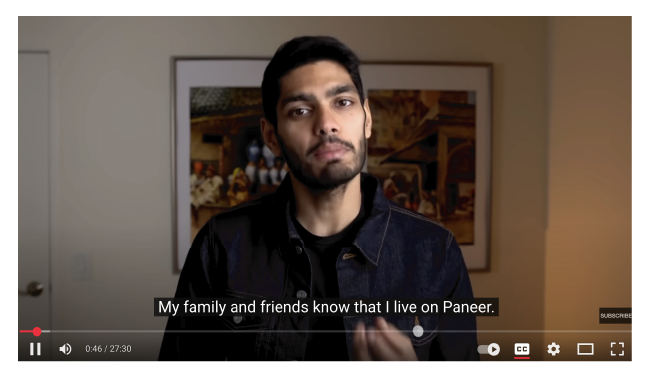
Transcription excerpt: "The Paneer you're eating happily, is it real or fake?... My family and friends know that I live on Paneer. So my team and I decided to investigate this fake Paneer scam taking over India."
He then uses on-the-ground interviews as well as animations to 'set the scene' and place it in the wider context
00:50 - 10:40
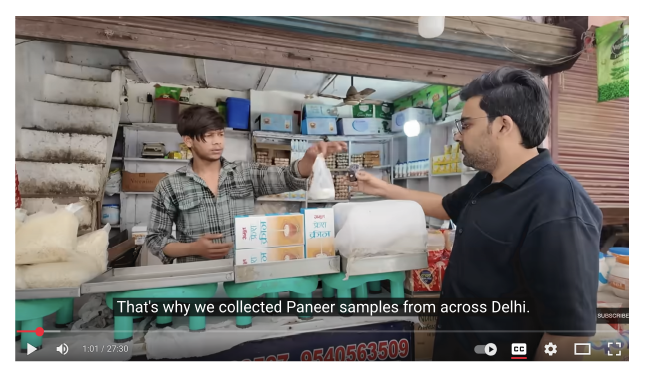
Transcription excerpt: "That's why we collected Paneer samples from across Delhi: from dairies, restaurants, stalls...We carried out the Iodine test for each sample and got some unexpected results."
Lastly, he shows how he created an experiment to debunk or prove his hypothesis
10:40 - 27:30
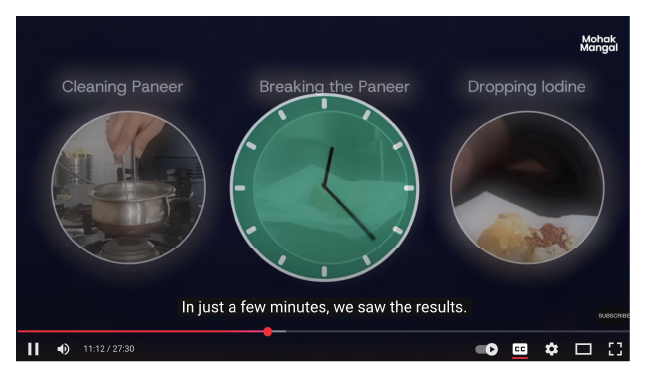
Transcription excerpt: "That's why we followed Dr. Aparna's advice. We washed the Paneer, we broke it down into pieces, then we added the iodine to the inner and clean portions and in just a few minutes we saw the result."
Go Deep
Use long-form and information-dense content to build lasting value and understanding
Leading news producers meet the demand for knowledge with long‑form, information‑dense content that serve as mini‑modules. They introduce a clear question as a foundation and build concepts, show evidence and synthesize takeaways. The result is durable value and content that is saved, watched and rewatched long after publication.
- Start with a learning goal to orient the audience and prime attention. Successful news producers open with one clear line — "By the end, you'll be able to explain…" — so viewers know what they will gain and why it matters. HowTown's videos exemplify this by examining the evidence behind commonly held claims, asking, "How do we know that X happened?" As co-founder Adam Cole explained, "Our job is to share information and help people understand where the information comes from so they can evaluate it themselves." From there, these successful news producers frame deeper civic or societal questions. They explicitly name what is at stake, who benefits or how policy decisions shape everyday life. Economics Explained, for instance, publishes only a few videos per month, each anchored to a big civic question such as, "Is this the recession the US needs to have?" Together, these techniques address a broader shift identified in our previous research: Younger audiences increasingly expect news to be directly actionable — something that helps them understand, decide or do something, not just helps them stay informed.
- Favor evergreen or under-explored themes. Leading news producers prioritize topics that matter in the long term, such as macroeconomics, history, science or common myths. As Jan Diehm, founder of the data-driven and long-form scrollytelling producer The Pudding explained, "Our projects take two to six months, sometimes over a year. So, we're purposely picking things that have a really long shelf life and a really long tail." The Observer's weekly The Slow Newscast is a similar example via audio. It mixes investigation into lesser-known details of topical stories — such as wars, economic policy and crime — with explorations of evergreen topics like immortality, childcare or the quest to save whales.
- Build concepts progressively. Successful news producers move from fundamentals to nuance and summarize each section in one clear sentence before moving on. This chunking guides understanding and prevents audiences from becoming lost in detail. Ros Atkins, the BBC presenter known for his 5-10 minute explanatory videos, has a seven-step method to achieve this: (1) set up, (2) find, (3) distill, (4) organize, (5) link, (6) tighten, (7) deliver. HowTown goes a step further with its 15-plus-minute long-form videos that have clear chapter markers and distill key information while allowing users to easily go back or skip specific sections.
HowTown
- Clear timestamp in the video title to set expectations. Interlude between animation and live interviews for pacing.
- Live interviews are used at end of each section as recap and explainer
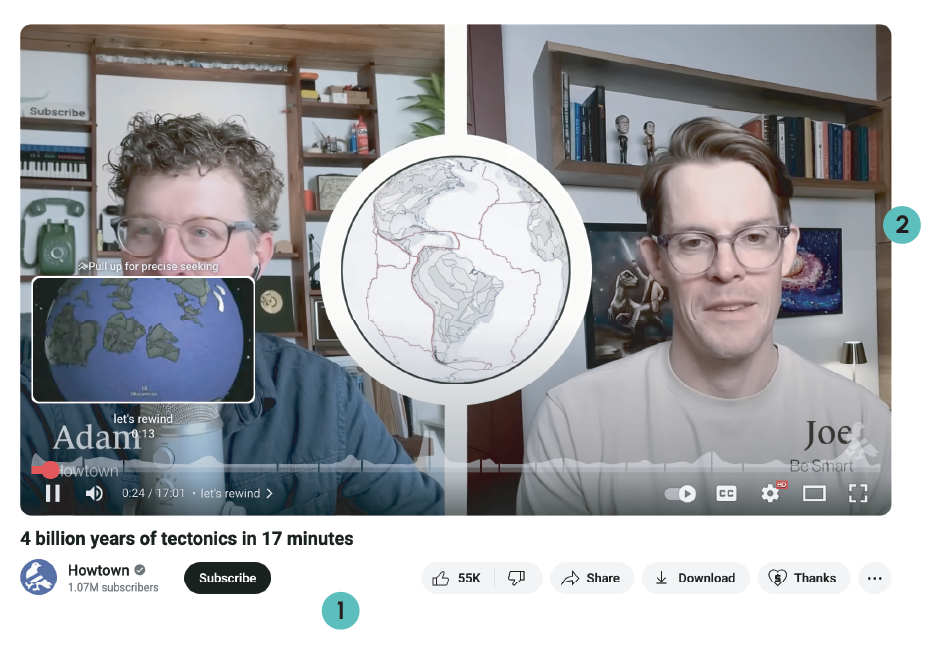
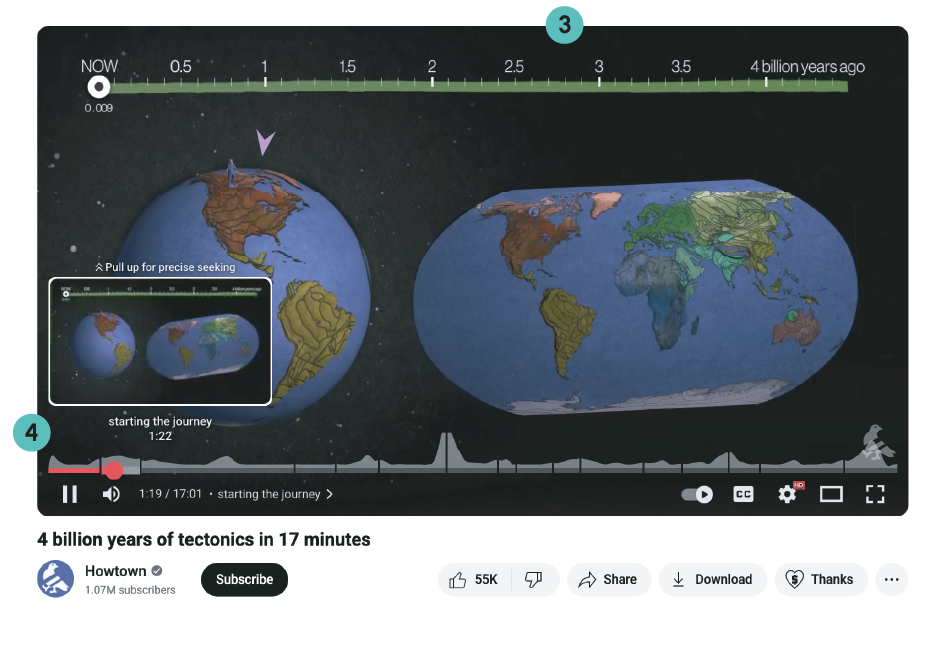
- As this story focuses on the tectonic evolution of the world, HowTown uses a visual timeline across entirety of the video to locate 'where in time'
- Clear chapter-markers for people to understand which part of the video they are in
Bring It to Life
Show on-the-ground reporting and add production value
Leading news producers understand that audiences want to learn directly from the source and see things for themselves. To do this, these producers clearly show how they have gathered information and add smart design elements as cognitive aids. The combination of presence and production craft signals care, credibility and purpose — key ingredients in deep learning. These also respond to a wider need identified in our previous research: News producers feel more credible when they showcase lived experience and demonstrate proximity to events and the people affected by them.
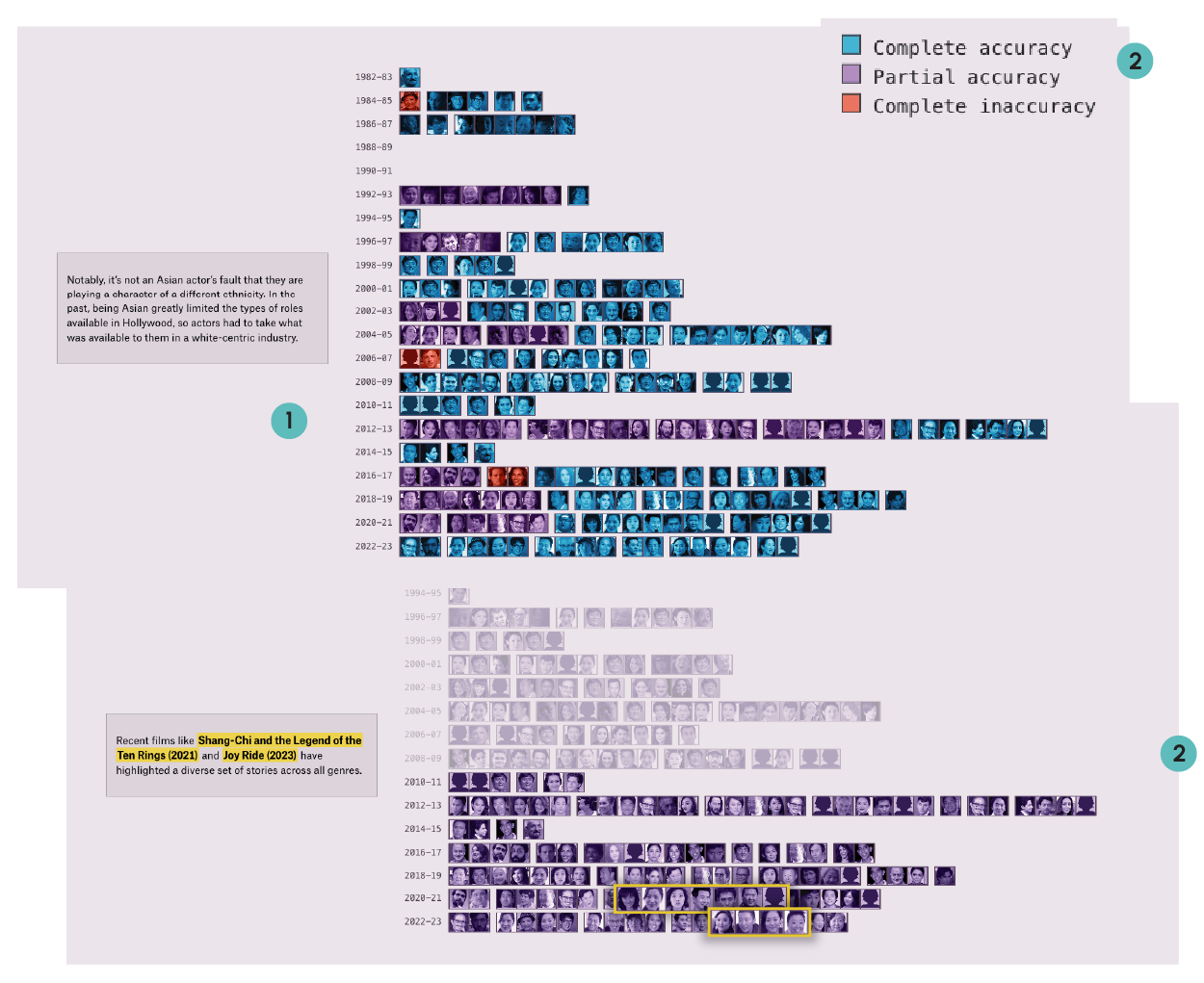
- Gather original evidence and showcase it in original ways. Leading news producers collect first-hand material through research, data gathering, open-source intelligence (OSINT) and interviews with experts or the people directly involved. Original data and primary sources signal rigor, broaden what counts as evidence, and strengthen their ability to explain not just what is happening but how and why. The Pudding, for example, built an original dataset from thousands of films to quantify Asian representation in Hollywood. As journalist Jan Diehm explained, "In the data viz world there are two schools of thought. One says minimalism works best — the data should speak for itself — and the other more experimental field, where we fall, creates memorable capsules. There's a famous chart we once made that is shaped like a monster, with the jagged data-line as its teeth, and research shows people remember that version far more than a simple line chart." Another key principle successful news producers show is the importance of being on-the-ground: They go on location to add sensory detail and context. Creator Cleo Abram combines studio explanations with field reporting — filming inside a zero-gravity facility to explore the science of space travel, for example — to bring experiential evidence to her work.
- Show your process and develop a signature form. Successful news producers break down stories step-by-step so audiences can follow their reasoning and see how conclusions take shape. They use visual walkthroughs — maps, timelines or annotated documents — to make topics tangible. Johnny Harris exemplifies this in his map-led explainers. He does not just use maps. He designs and redesigns them on screen, walking viewers through how he combines satellite imagery, historical cartography and his own graphic layers to uncover patterns and meaning. The act of constructing the map becomes the story itself. Sportsball applies the same principle through its hand-drawn charts and diagrams, which take shape in real time as the host unpacks the business of sport. The evolving sketch clarifies ideas and creates a recognizable aesthetic. In both cases, form mirrors process, and audiences see the thinking unfold.
The Pudding "Asian misrepresentation in movies"
- Gathering original data. In this case: 80 films from 1982 to 2023, with 160 Asian actors playing 236 characters that are central to the film, to investigate whether they are misrepresented.
- Explaining their reasoning behind how they gathered data and showcasing it through a 'scrollytelling' format with original design
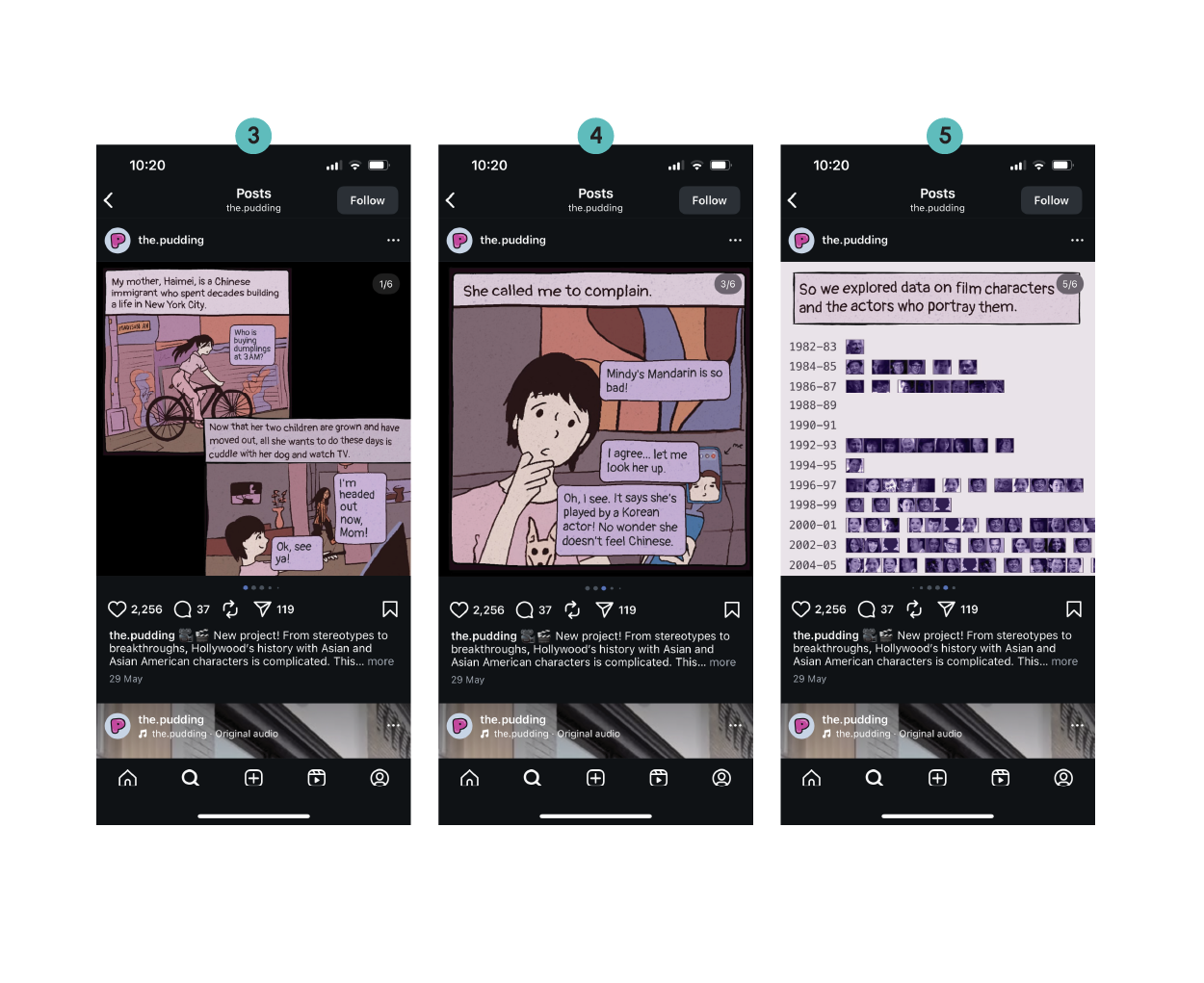
- Use of a personal story behind why The Pudding looked into this topic
- Use of cartoons to stand-out while people 'scroll' through their feeds
- Clear follow-up action to read the whole story
Processing complex topics by exploring different perspectives
Learn moreCreate Open Conversations
Host long-form unscripted conversations that let people share their perspectives
Leading news producers know audiences value spaces where those they trust can think aloud, test ideas and listen to others do the same. Openness about beliefs and uncertainties builds trust and makes conversations more engaging, as audiences witness opinions forming and evolving in real time. This concept of transparency of intention — being transparent about any conflicts of interest, agendas or biases a person may have — was a key principle we identified in our previous research.
- Create open spaces for honest conversation where producers and audiences can think aloud. Leading news producers use podcasts and long-form videos to invite audiences into this process, turning explanation into conversation and performance into shared understanding. Channel 5 with Andrew Callaghan exemplifies this by letting people speak at length, reclaiming a form of dialogue that traditional broadcast interviews have largely lost to confrontation and control. His open, unhurried questioning spans two distinct formats — street interviews with everyday people and longer conversations with public figures — designed to create space for reflection rather than reaction. His Two Years Later series extends that ethos by re-interviewing individuals and communities from earlier videos to show how they have evolved over time, making continuous coverage a central element of accountability and care in reporting. The Ezra Klein Show, by contrast, demonstrates openness through structured intellectual exchange. Each episode begins with a clearly stated argument or hypothesis, which Klein tests through reflective, clarifying questions and careful summarization of his guest's perspective.
- Clearly disclose your intention, bias or viewpoint. Successful news producers encourage hosts to briefly explain their point of view, making their opinions clearly visible. This builds credibility and honesty, inviting audiences to examine their own biases with openness as well. The Rest is Politics achieves this by grounding the hosts' differing political backgrounds and by making those perspectives an active part of their exchange. Rather than simply stating their positions, Rory Stewart and Alastair Campbell prompt each other to reflect on how their past experiences shape their interpretations of current events. This conversational questioning makes their viewpoints feel organic and exploratory, turning their personal experiences into a shared way of understanding and contextualizing the news.
The Ezra Klein Show: "We are going to have to live here with each other"
Ezra Klein sets the context of the conversation with a 3-10 minute introduction explaining what the topic will be, what his position on it is and why he invited his guest
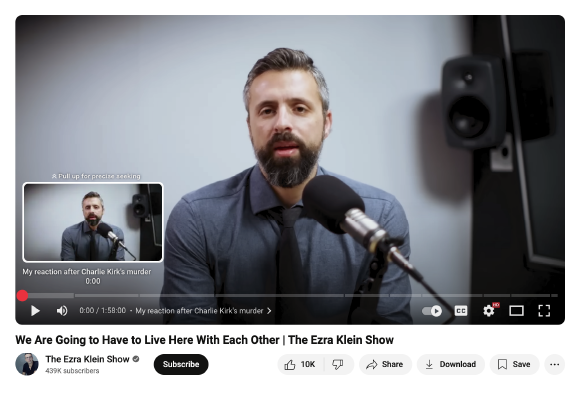
Transcription excerpt: "I want to create a space that takes our disagreements seriously...but does so without deepening our divisions irreparably. I taped an episode with Ben Shapiro, he is well to my right, a person with whom I have many disagreements and also good conversations. And this one was no different. You learn things talking to people you don't expect."
After the context, he welcomes his guest who then explains their own position, hypothesis, or experience on the topic
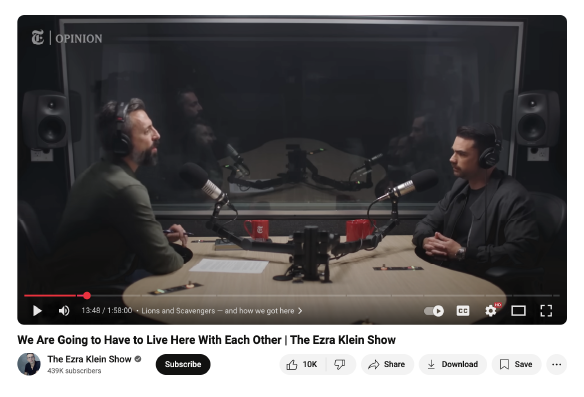
Transcription excerpt: "So, let's get into your book. You have a theory of two groups here, lions and scavengers. What's a Lion? What's a Scavenger?"
Throughout the conversation, Ezra tries to clearly summarize his guests points and follows-up with either rebuttals or further questions
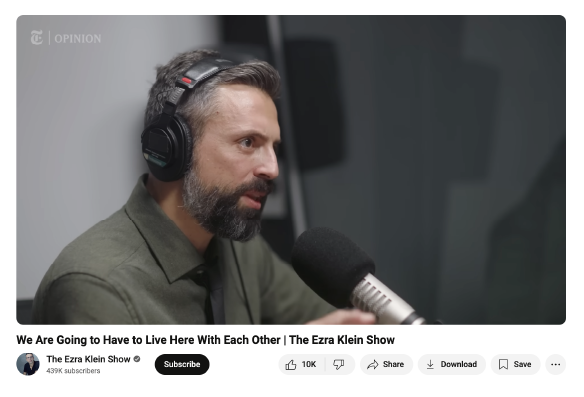
Transcription excerpt: "This feels to me like a more narrow argument of political strategy and I don't even totally disagree with it. But I want to push you a little bit into something more fundamental here..."
Orient the Audience
Use clear, thoughtful design to highlight perspectives and aid understanding
Leading news producers complement long-form unscripted conversations with intentional structure, using visual, audio and editorial cues that help audiences easily understand which perspective is being presented.
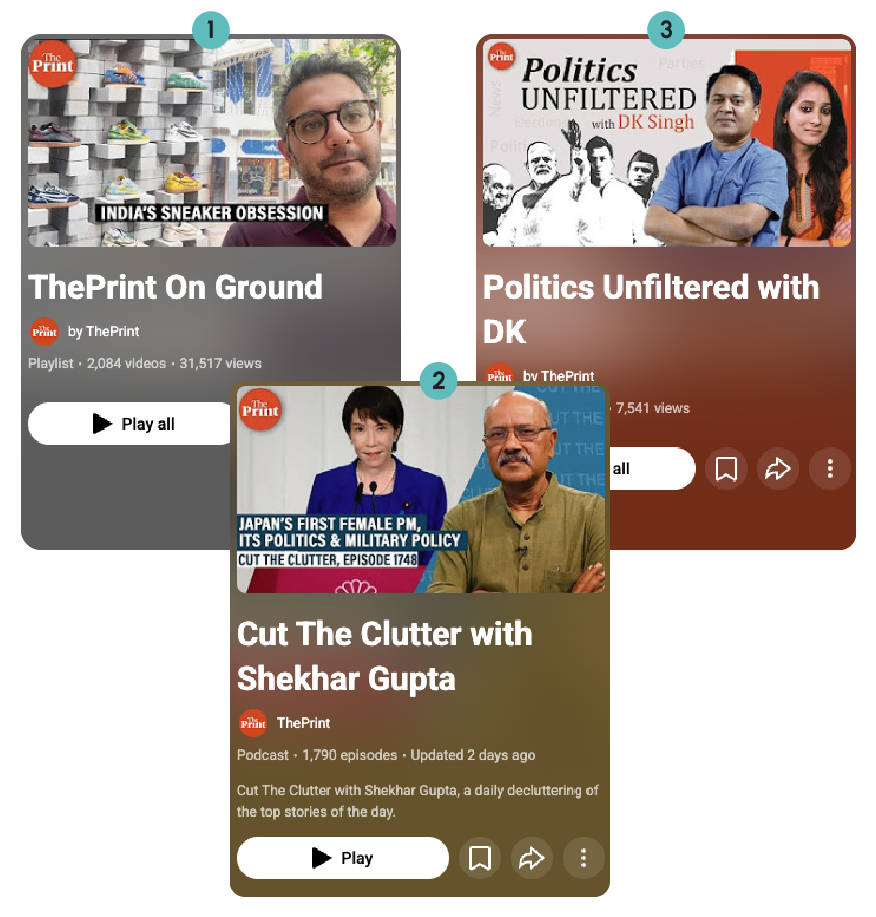
- Vary show formats to deepen engagement and reach audiences across information needs. Successful news producers create deep-dive episodes that unpack background, add follow-up Q&As to respond to audience questions, and showcase interviews with key players offering fresh perspectives. ThePrint demonstrates this effectively across its ecosystem: ThePrint On Ground focuses on the lived experiences of everyday people; Cut the Clutter uses thoughtful design choices to show different perspectives and make breaking news easier to follow; and Politics Unfiltered with DK frames deeper civic questions through a longer explanatory Q&A style. This approach provides audiences with a variety of formats and multiple ways to connect with the same ideas, something our previous research revealed to be vital. Successful news producers pair this diversity of format with consistent, visible signposts that help audiences navigate complexity. They clearly label sections such as 'The Facts,' 'The Debate' or 'Why It Matters', and support them with visual cues such as side-by-side frames or on-screen graphics to help orient audiences. Outlets such as AllSides, Semafor, GroundNews and Tangle News exemplify this, using structured design and transparency tools such as AllSides' Bias Checker to create more convenient, low-effort means to engage with information.
The Print and GroundNews
- The Print effectively creates 3 types of YouTube shows each with a unique purpose of either showing people's perspectives
- Expert opinion
- Two people openly discussing
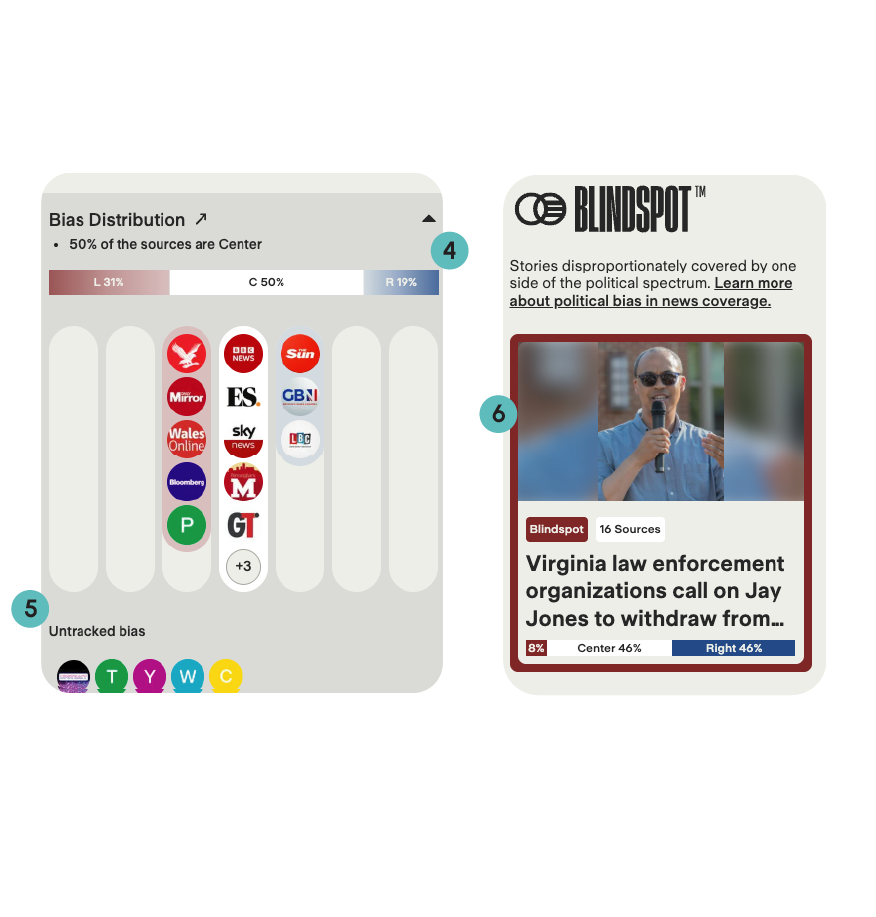
- GroundNews' product focuses on highlighting how different sides of the political aisle cover the same stories, clearly showing which news sources have reported on the story based on their proprietary spectrum that classifies news sources from 'far-left' to 'far-right'
- It clearly indicates whether sources not yet classified on their political spectrum are also covering the stories
- BlindSpot is another feature that identifies stories receiving uneven coverage: extensively reported by one side but scarcely, if at all, by the other
Include the Audience
Be responsive to audience demands and incorporate their viewpoints
Leading news producers understand that Sensemaking is social and participatory. Audiences do not just receive information; they help steer it. As such, live or semi-live formats such as Q&As, comment responses or reaction explainers help news producers turn the news into actionable information for their audiences. This is a vital component of their Ideal News Experience.
- Use livestreams to transform news into a shared, real-time act. Successful news producers turn live moments into spaces where journalists and audiences make sense of events together. Livestreaming creates immediacy and intimacy, bridging the distance between news producer and news consumer. Rather than treating live formats as simple broadcasts, these news producers use them as forums for participation, a place to react, ask, debate and co-create meaning. HasanAbi, one of Twitch's most-watched political streamers, exemplifies this approach. His long, free-flowing daily broadcasts mix reactions to the day's headlines with live responses to breaking news, offering unfiltered commentary that evolves in real time. He makes his own perspective part of the story, turning opinion into a tool for connection and making the act of following the news feel communal. Live interactions further deepen this connection. By surfacing questions from comment sections, direct messages or polls, he leverages audience curiosity to guide the discussion and decide where to dwell. Rewarding participation through on-air recognition or direct replies strengthens this bond and reinforces journalism as a shared act. The Deshbhakt illustrates the same principle in its Saturday Night Livestream, where host Akash Banerjee answers questions — including from paid "super chat" followers — to turn audience engagement into both a community ritual and a revenue stream.
HasanAbi
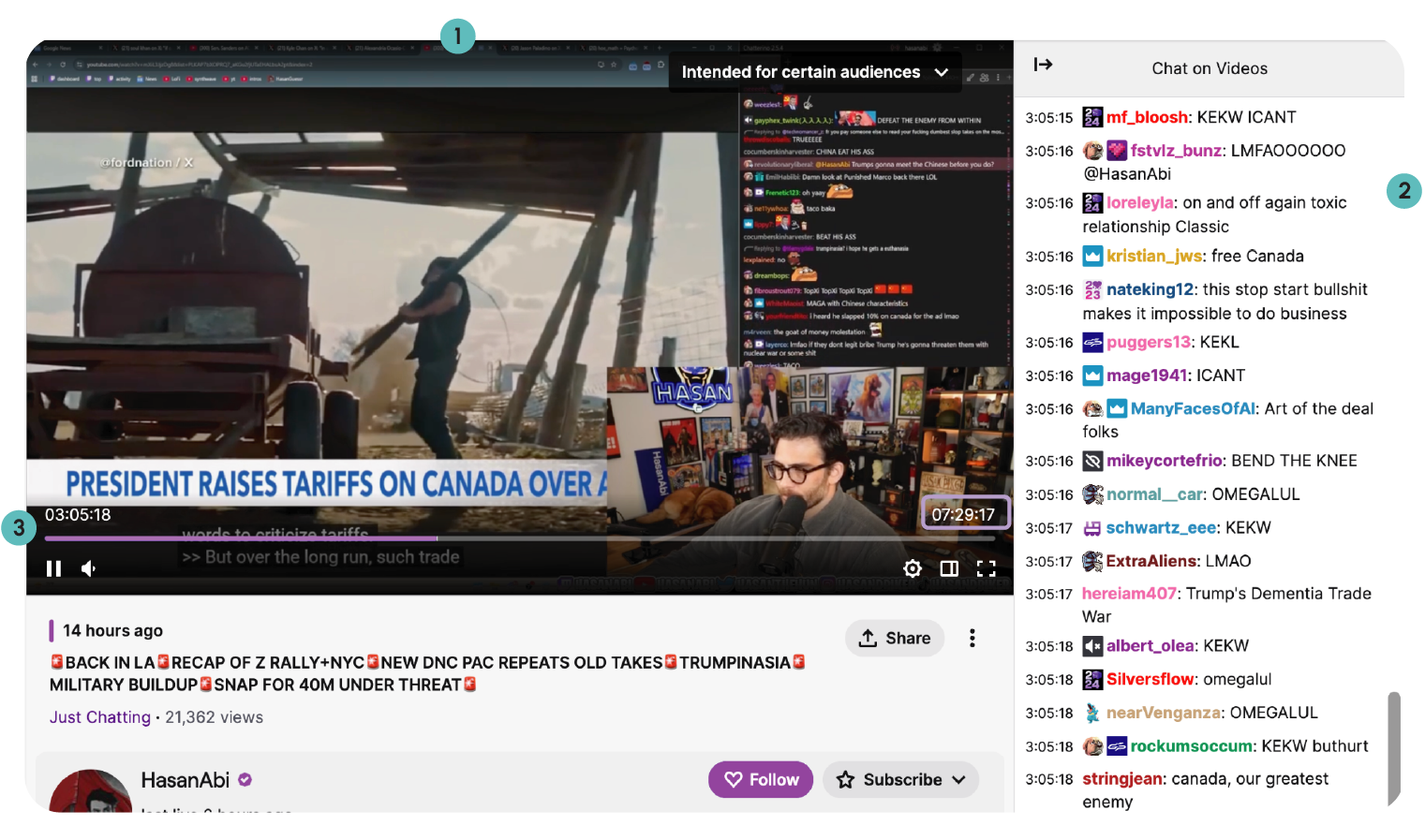
- Hasan watching TV segments and reacting to tweets, usually using humor to give his takes to his audience
- Live chat that respond to video asking questions (and often just reacting to Hasan's takes)
- Seven-hour long unscripted daily streams, making sense of the biggest news of the day
Use Satire Wisely
It should stimulate critical thinking
A segment of leading news producers uses satire to open up space for reflection, often on difficult, divisive or emotionally charged topics. This approach helps people engage with issues that might otherwise feel too polarizing, overwhelming or abstract, and makes them more palatable without diluting their importance. This approach directly meets the language demands of next gen news consumers who want news to be delivered in a way that is informal, humorous and entertaining, as outlined in our previous research.
How news producers achieve this in practice:
- Authentically plug into the zeitgeist. Successful news producers borrow the viral trends and stories of the moment — memes, formats, viral audio clips — and connect them to the real story. A timely meme can be the on-ramp to Sensemaking, allowing people to understand the context, not just the punchline. As Dave Jorgensen of Local News International explained, "We want to come at it in a comedic way that allows people to get the news but also acknowledge that this story is wild ... there's a lot going on and there's news fatigue ... so we're going to do it in a format that's more entertaining than a traditional news report." Jorgensen anchors his short-form videos in viral formats and memes — such as through the use of a famous scene from The Wolf of Wall Street to explain a CDC story — and meets audiences where they already are by turning internet culture into a gateway for news literacy.
- Build recurring inside jokes to make complex topics feel approachable and foster a sense of belonging. Successful news producers create a shared language for their audiences that turns critique into connection. The Daily Show under Jon Stewart mastered this through its recurring correspondent segments, in which exaggerated archetypes — like the overconfident pundit or clueless foreign reporter — parodied broadcast news tropes and built continuity through humor. Similarly, adopting characters or personas to clarify a point can make ideas more tangible. Morning Brew's parody videos, such as its mock Palantir ad, use the voice of a slick corporate spokesperson to expose the absurdities of business culture, sharpening the critique while keeping it entertaining and accessible.
Morning Brew
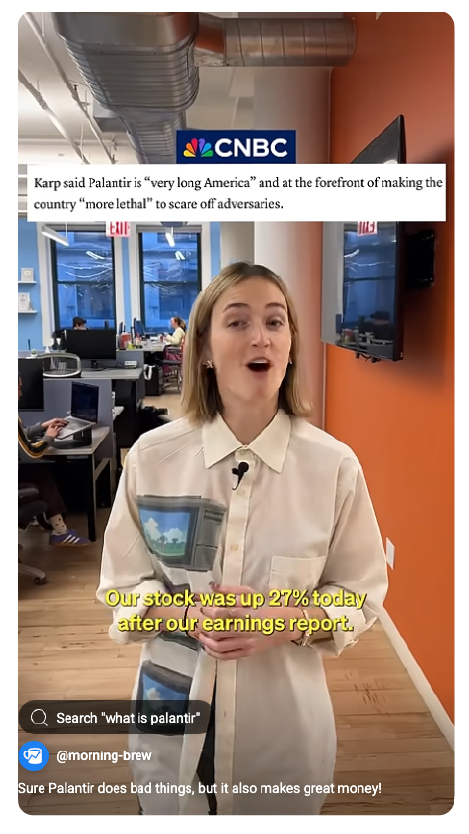
Always linking to the original business story to anchor it to one company and how it's being covered
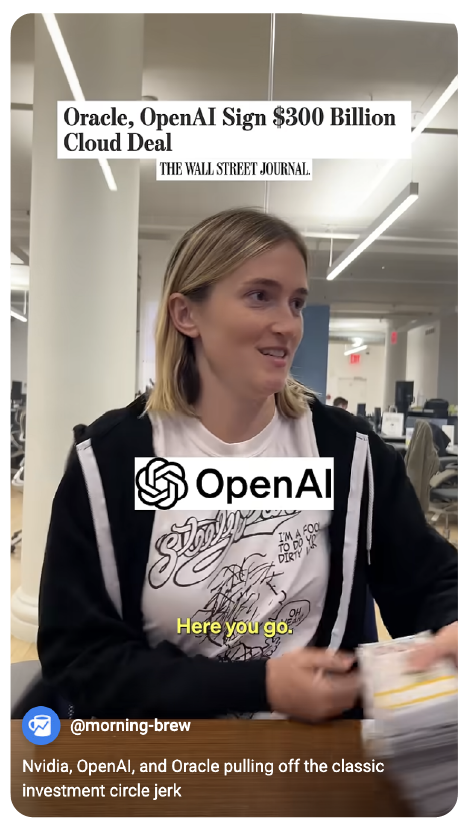
Always using the Morning Brew office as the setting and background to make it recognizable and approachable
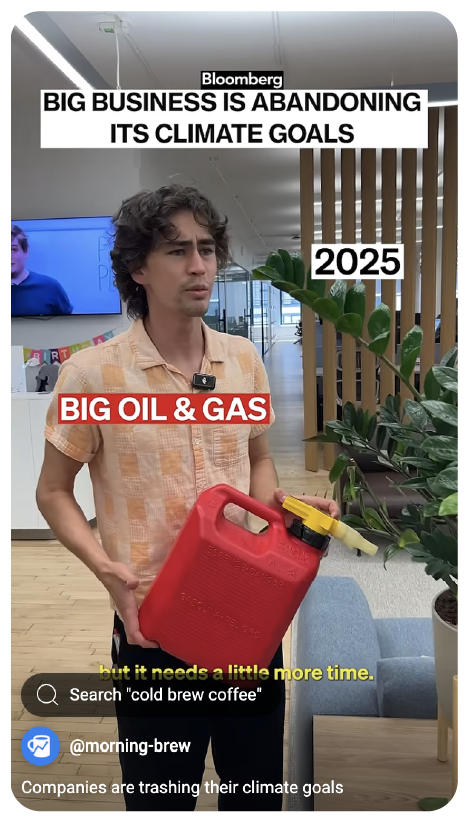
Creating satire of the news through the use of props or funny captions
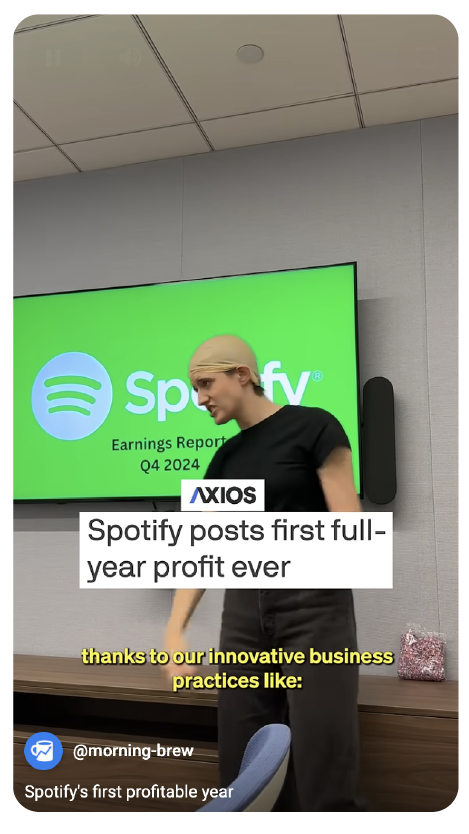
Creating satire through the use of over-the-top personas or characters
Sharing news content to connect with others
Learn moreBuild for sharing
Create content that people want to send to their peers
This is how audiences become distributors. Instead of information being pushed by news producers, it travels laterally — among peers, in group chats, across feeds. The most effective news producers design content that sparks this behavior, content that is emotionally resonant enough to share, simple to grasp and easy to repost. It also helps close the affinity gap identified in our previous research, as producers move beyond stating facts to build genuine relationships that make audiences want to share.
Leading news producers tell human stories
People are far more likely to share a moment of warmth or recognition than a data-heavy or complex story. These producers focus on local and personal narratives that celebrate small wins, resiliency or creativity. For example, Morning Brew’s Out There with Macy Gilliam spotlights local entrepreneurs in short clips that “feel good to share,” building reach and brand affinity.
Successful news producers sometimes use memes to condense meaning and inject humor
Litquidity, a finance and investment social brand, uses humor to comment on market news and expose the irrationalities that often define it. Across its feed posts, Reels, and Stories, it draws on viral movie clips, celebrity quotes, famous punchlines and playful graphics to deliver quick, witty takes on the day’s financial stories. The result is distinctive memes that make complex market behavior feel more understandable and entertaining. FT Alphaville — a free mini-brand within the Financial Times — illustrates how humor and cultural fluency can attract new audiences to a traditional news organization. Its tagline — ‘We love financial plumbing, debt crises, balance sheets, margin calls, economic puns and snark’ — captures its strategy. It often engages on Reddit ‘Ask Me Anything’ to drive interest back to the site, while also using playful chart edits that are more shareable, such as this Halloween-based markets story.
Successful news producers optimize for effortless sharing
They design each product with frictionless distribution in mind, thinking of how a story, clip or social card looks when screenshotted, linked or forwarded. They add clear share buttons, social-friendly visuals and one-sentence summaries. Shareability is not luck for these producers but rather a product feature, and the easier it is for audiences to recirculate work, the more likely it becomes part of their online identity. Most news producers today have share buttons on their articles, but there is room to learn from beyond news. For example, Spotify detects when users take screenshots while in the app and automatically generates a custom- designed share card. Every song also has its unique QR code for offline sharing.
Spotify