Content Overwhelm
A substantial number of our diary study respondents described their news experience as overwhelming:
One of the biggest challenges for me when trying to stay informed is the fact that there's just so much content out there. I sometimes don't even know where to start.
One of the biggest challenges I face in staying informed is dealing with the information overload. There is so much news out there from so many sources, and it can get overwhelming. It's also hard sometimes to figure out which sources to trust, like, which one is authentic, especially with misinformation spreading quickly online.
Our analysis revealed that a feeling of overwhelm may be the result of broad shifts in how news is produced and delivered.
| News was… | Now, news is… |
|---|---|
| finite / "finishable" | infinite / unfinishable |
| defined by news organizations and broadcasters | defined by consumers |
| recognizable based on familiar formats and styles | often delivered in the same forms and styles as many other kinds of content |
Finite content → infinite stream
News formats used to be stable and distinctive. Whether it was a newspaper, a magazine or an evening broadcast, the news existed in a finite package or period of time that consumers could opt in to or out of. Stable formats gave consumers clear signals about where to invest their attention and how much attention was required to feel like an informed citizen.
Today, news is pervasive, embedded in many forms of entertainment and information gathering — from social media and short-form video content to search engines. It is no longer easy or even possible to opt in or out of news; it is always potentially right around the corner.
[There's] just too much information. I mean, you can't even scroll through, like, like, Instagram or TikTok or open up a media app without just all sorts of different news outlets saying completely different things.
I think for me the biggest challenge to stay informed is just the amount of media that I can consume and can find in different channels. It's hard to sort them out and to understand what to pay attention to and what to not… just because there's so much available on the platforms.
The volume of content far exceeds that of traditional news producers. A 2016 article in The Atlantic reported that The New York Times produced approximately 230 pieces of content per day on average; The Washington Post, more than 500 per day. Although updated statistics are difficult to ascertain, the quantity produced from even one news outlet far outpaces a single reader's capacity.
With news as a near-endless well of information, consumers must decide what their "appropriate" amount of consumption is. Some study participants express anxiety that they are not consuming enough, leaving them feeling uninformed or concerned that they are missing something important. Others are worried they are consuming more news than their mental health can handle. Both groups are struggling to answer the same question: When is enough, enough?
I think my biggest challenge is, you know, every day you get a lot of information. …you get unnecessary information that you don't need.
For me, the biggest challenge is the quantity of news we have access to. There are hundreds of news stories every day at city, state, national, and international levels, in different areas like culture, politics, and economy. It is difficult to follow all of them.
Narrow, news organization-defined boundaries of news → Broad, consumer-defined boundaries of news
In our first report, we stated that:
Young news consumers… feel that anything can be categorized as news so long as it's of interest to the audience. Ultimately, consumers, rather than editors, will decide what is newsworthy given that "The distribution of power within news has changed from producers to audiences. ... Therefore, what the news will look like in 2030 is what the audience wants and needs in 2030."
This more detailed look into young consumers confirms and expands our previous findings. There is no consensus criterion for what makes information "news" — certainly not one that aligns with the traditional idea of "hard news" as defined by traditional news producers.
Concrete examples of news collected from young consumers in our data ranged from classic civic-minded headlines and personally meaningful updates on hobbies or careers to simple human-interest narratives with high entertainment value.
When it comes to news, I am looking for relatable stories about things I care about, family, children, daycares, health and wellness, medicine, new discoveries, the vaccine industry, government updates, real-life stories…
Varying definitions complicate the choice of when and how to opt into news content. The same consumer's preference on how and when to get community updates may differ from his or her preference on personally meaningful information or entertaining human interest content. Creating a single solution or choosing a single trusted source to meet all these preferences is extremely challenging. Instead, consumers cobble together their own consumption strategies, individually defining what constitutes news and finding sources and mediums to match.
Content creators from Brazil, the US and the UK
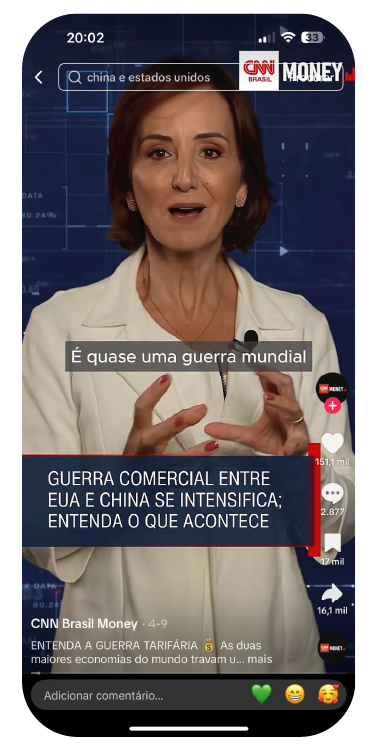
Pedro L. (Brazil) believes this story about the intensifying trade ward between the US and China is news because it is civically relevant on an international scale, and he believes it's important to stay informed.
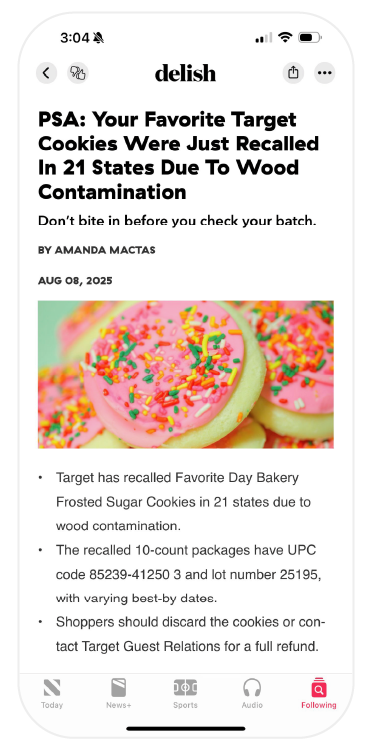
Estazia A (US) considers this news because it personally impacts her daily life, since she lives in one of these states and frequently shops at Target.
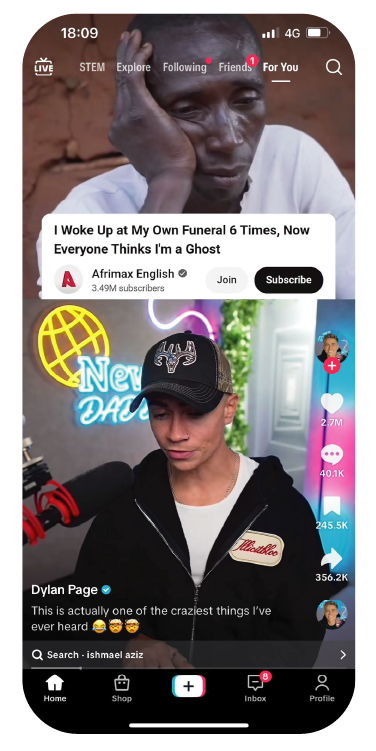
Daniel G (UK) defines this story as news because it's non-fiction, but otherwise treats it as entertainment content.
Recognizable quality markers → flattened formats
To further complicate the landscape, many traditional markers of news quality and prestige have been blurred. In the past, the difference between tabloid and broadsheet newspapers, the paper and print quality of magazines, and the tone of voice and language of broadcasters determined whether a news source was legitimate and relevant. Now, many of these markers are gone.
Most consumption happens on screens, and, for the younger-than-25 cohort, often in social media applications where only the display name and a tiny avatar may perhaps distinguish professional news producers from everyone else. Beyond social media, barriers to information distribution have disappeared, leading to a news boom that fills aggregators, email inboxes, and podcast feeds with information vying for consumers’ focus.
Traditional news organizations often use attention-grabbing strategies to cut through the noise, but young consumers are uncomfortable with this trend. They know they are the prize in a fierce competition for engagement and are wary of techniques that may be used to capture their attention.
My biggest challenge when it comes to staying informed is trying to find actual news of substance between the noise (all the ads/content competing for your attention on social media), and believing/spreading misinformation.
I think for me the biggest challenge to stay informed is just the amount of media that I can consume and can find in different channels. It's hard to sort them out and to understand what to pay attention to, and more, what to not…just because there's so much available on the platforms.
Even the smallest of news channels are able to post information or post news on the Internet, which makes it slightly difficult for people to, you know, figure out what is reliable news, what is the true news, and what's not.
I'd say the biggest challenge for me when trying to stay informed about the news is finding the right articles, what you want to know about. So because there's all these different platforms, and you can't trust them all apart from news websites and watching the news on TV.
This battle for attention has eliminated many traditional markers of trustworthiness, and consumer skepticism devalues those that remain. The result is that external quality control is difficult to come by. The news landscape feels overwhelming and confusing, with few signposts; as such, young consumers must chart their own path. And they do.